"T" Series
"T" Series
WHAT
WHAT
WHAT
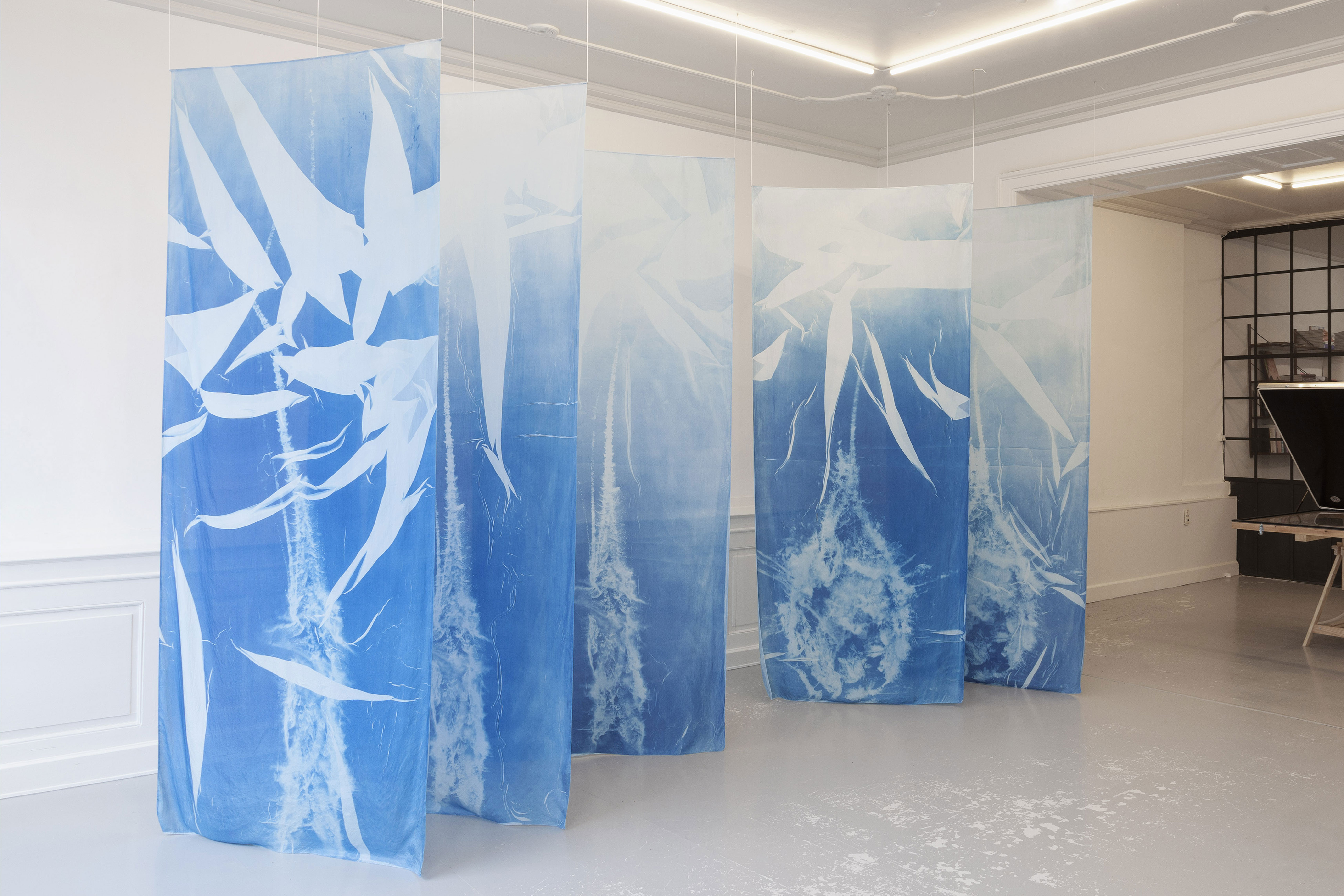
3 series of 5: T5, T32/69, T35, T80, T191. Cyanotype on white Habotai Silk in medium weight. Dimensions: 280 x 114 cm
3 series of 5: T5, T32/69, T35, T80, T191. Cyanotype on white Habotai Silk in medium weight. Dimensions: 280 x 114 cm
3 series of 5: T5, T32/69, T35, T80, T191. Cyanotype on white Habotai Silk in medium weight. Dimensions: 280 x 114 cm
WHEN
WHEN
WHEN
Feb, 2025
Feb, 2025
Feb, 2025
About
About
About
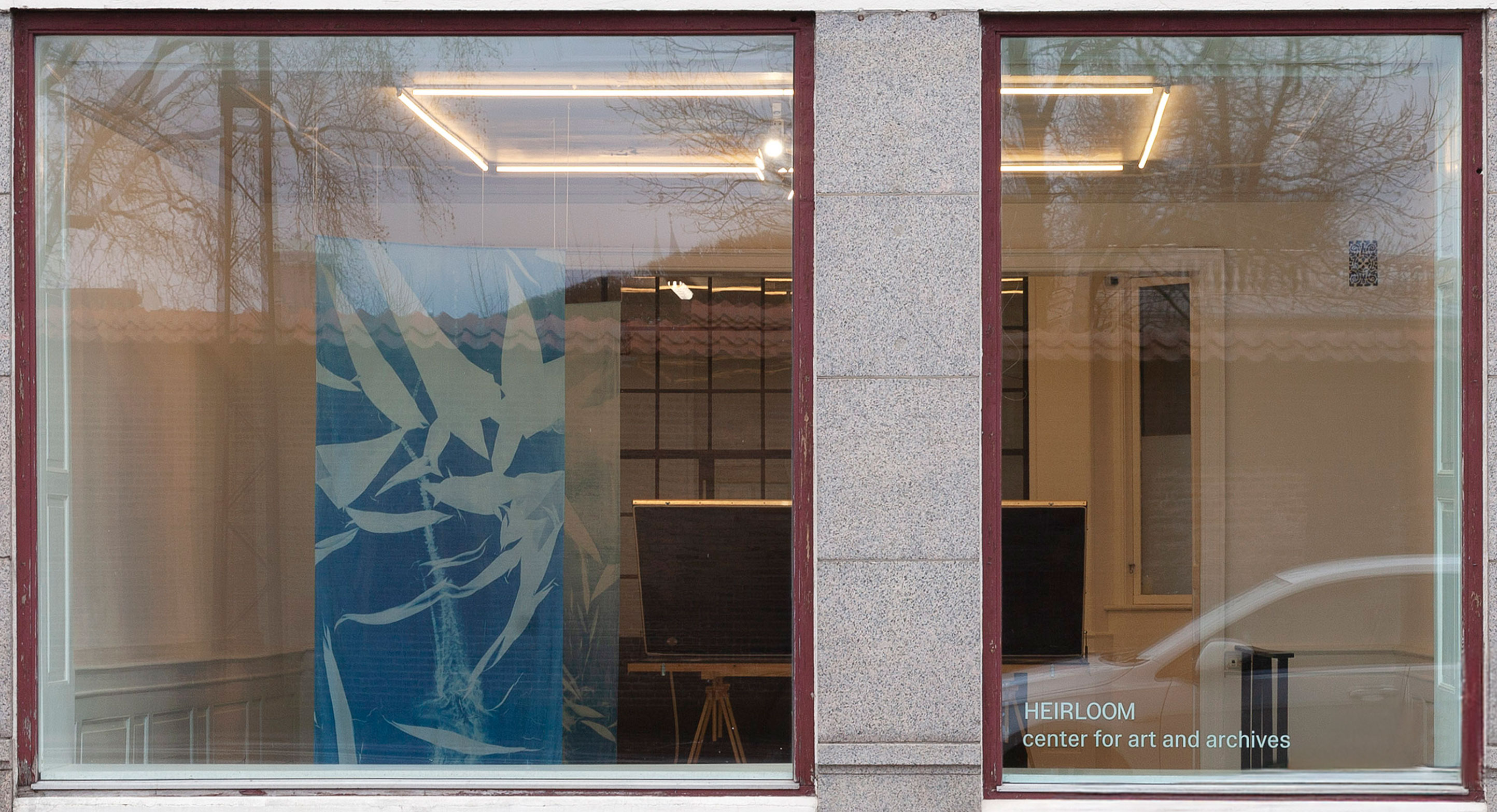
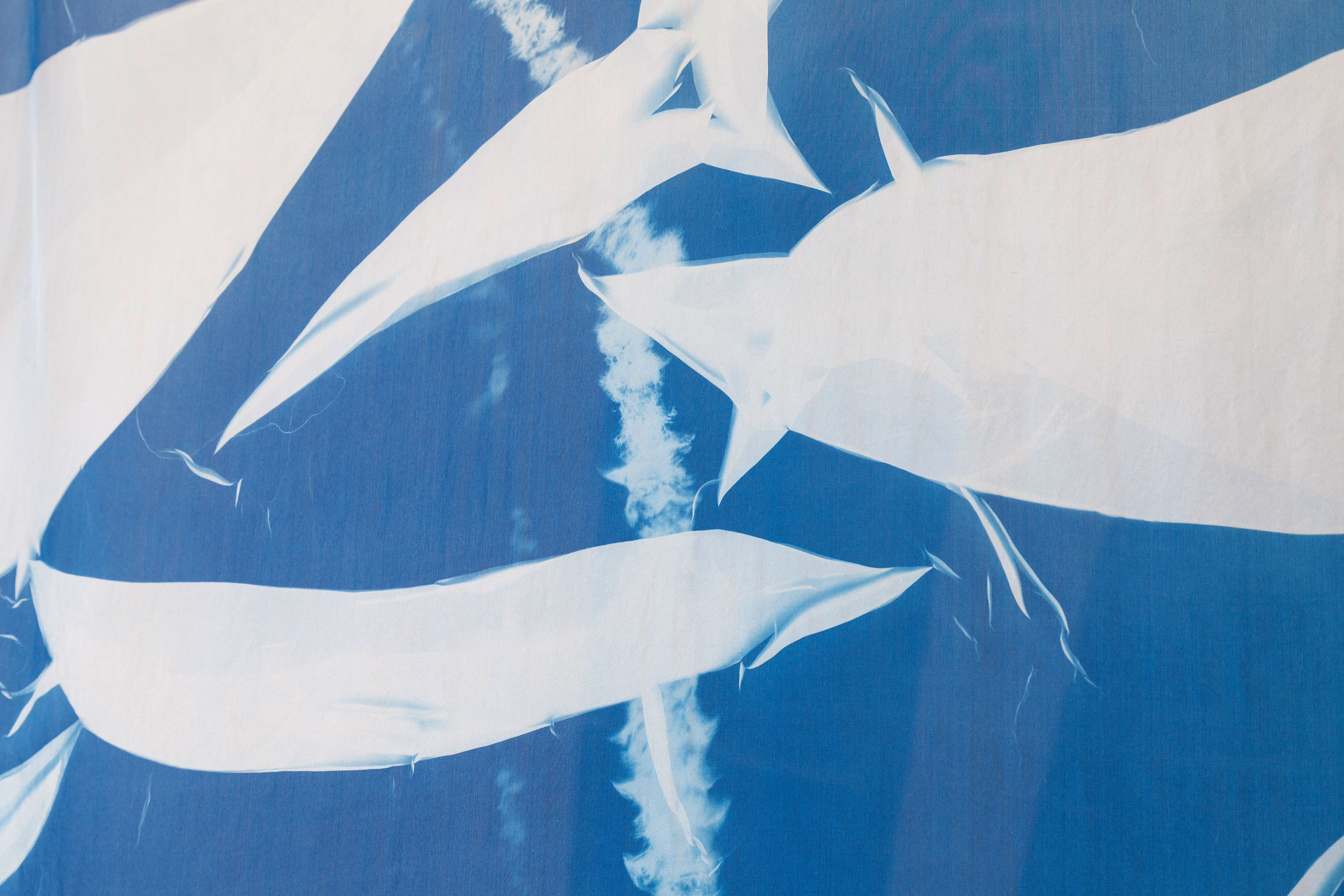
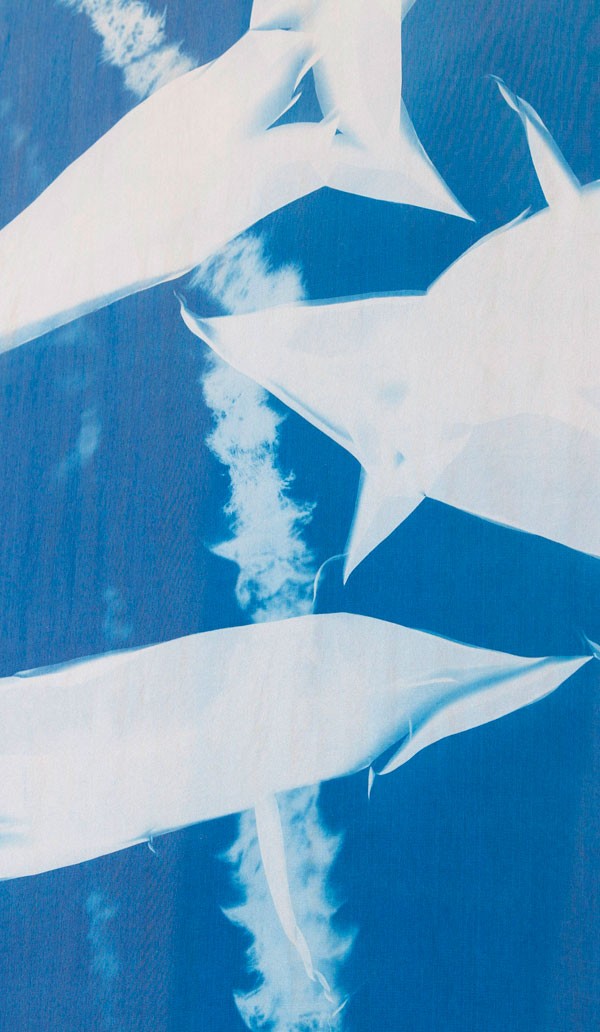
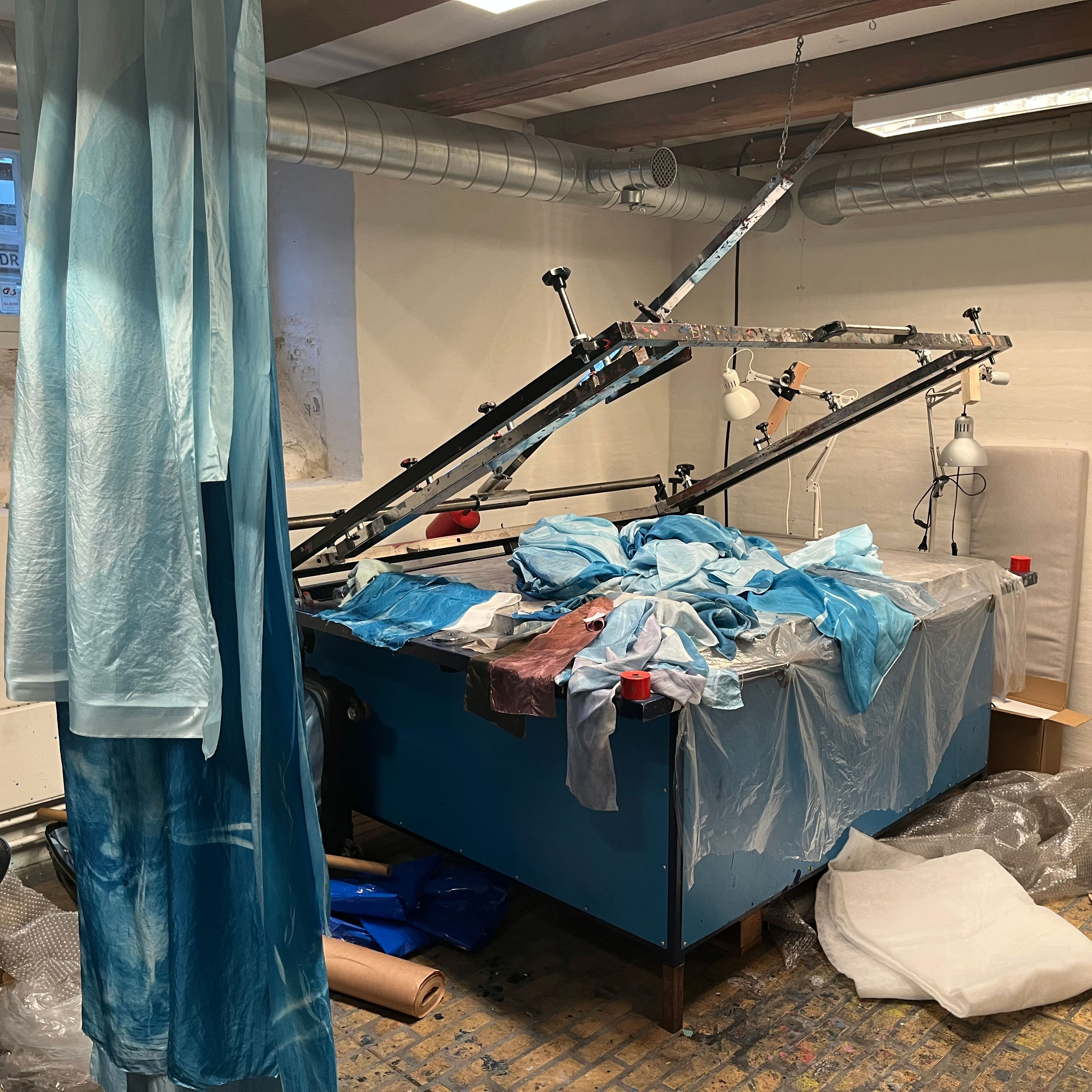
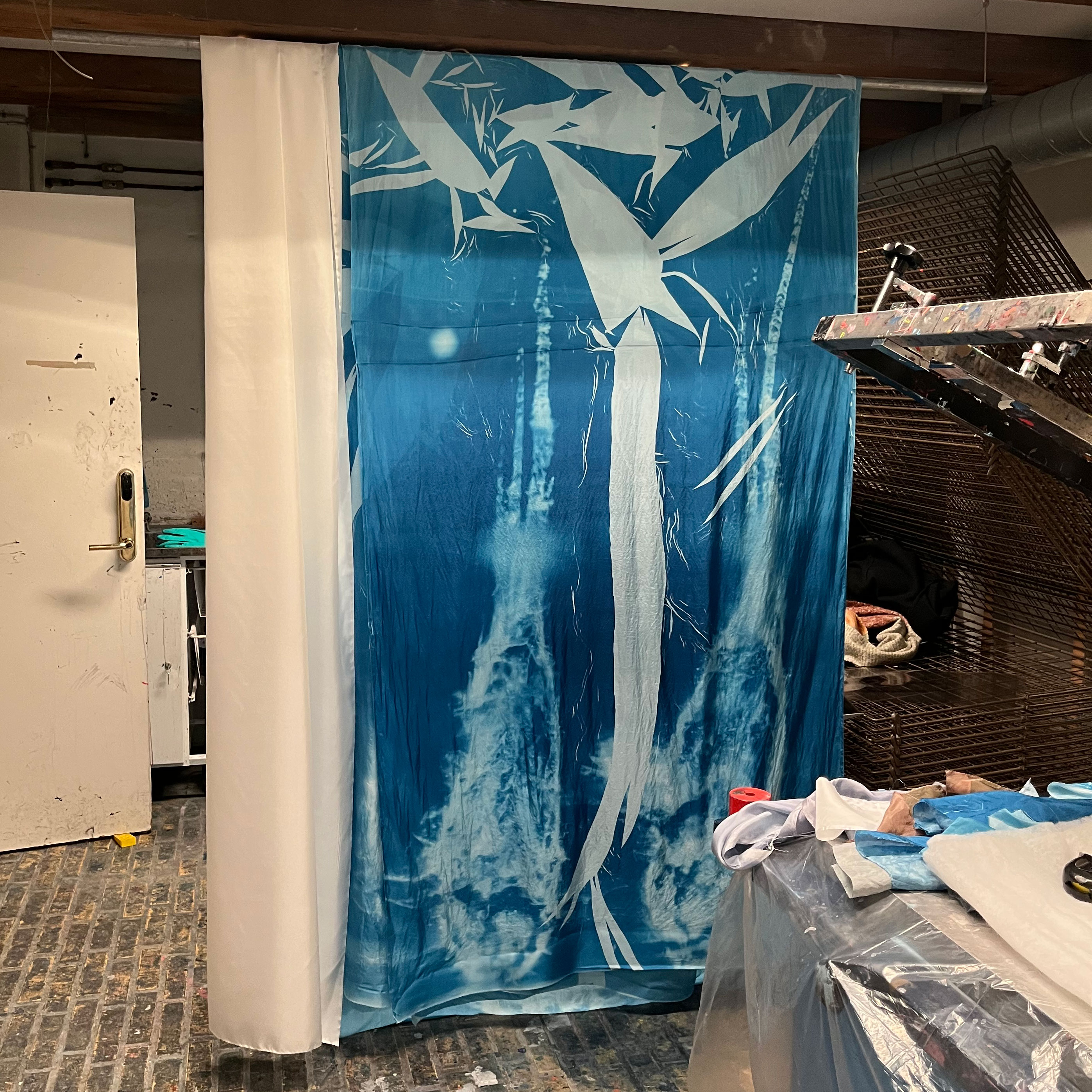
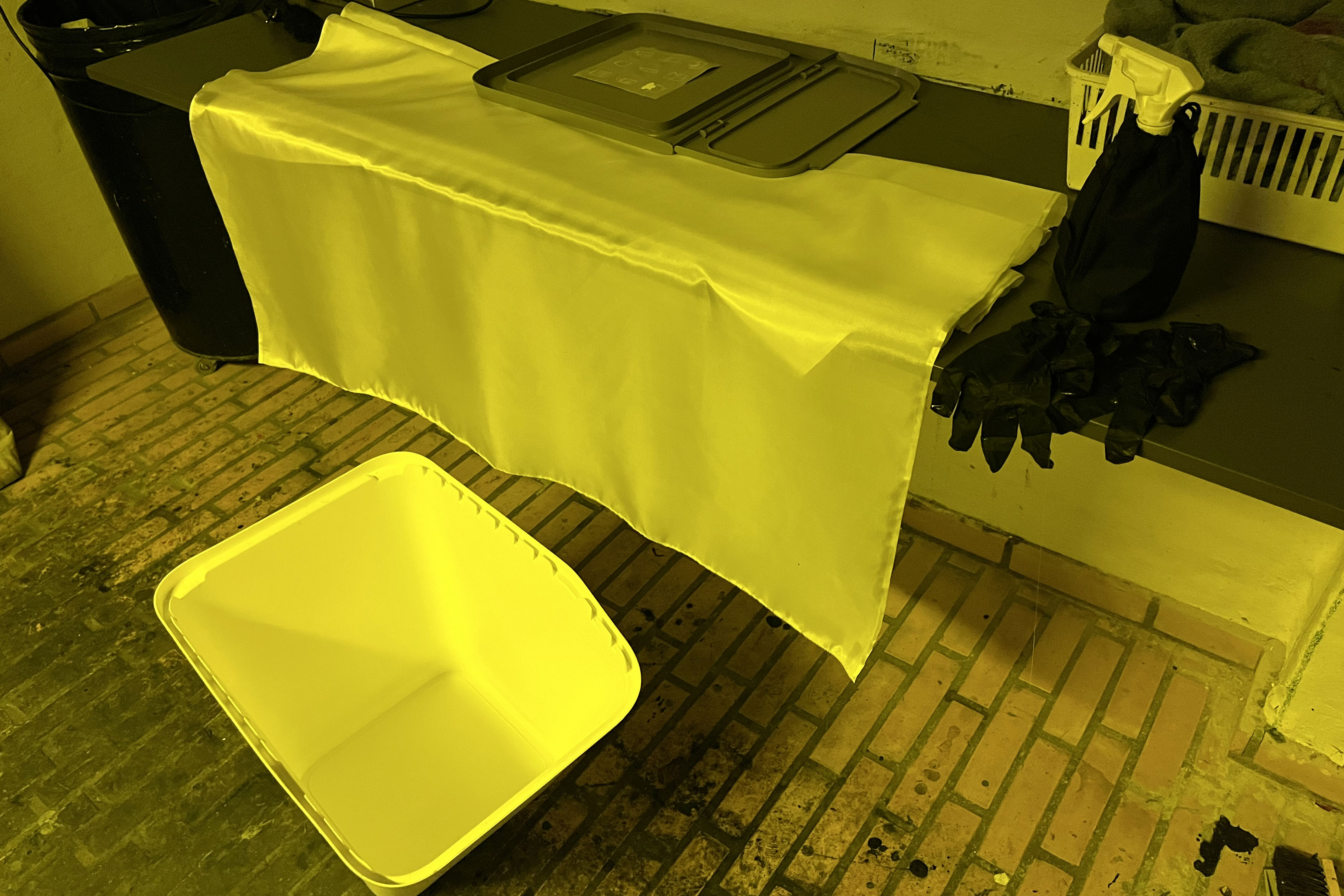
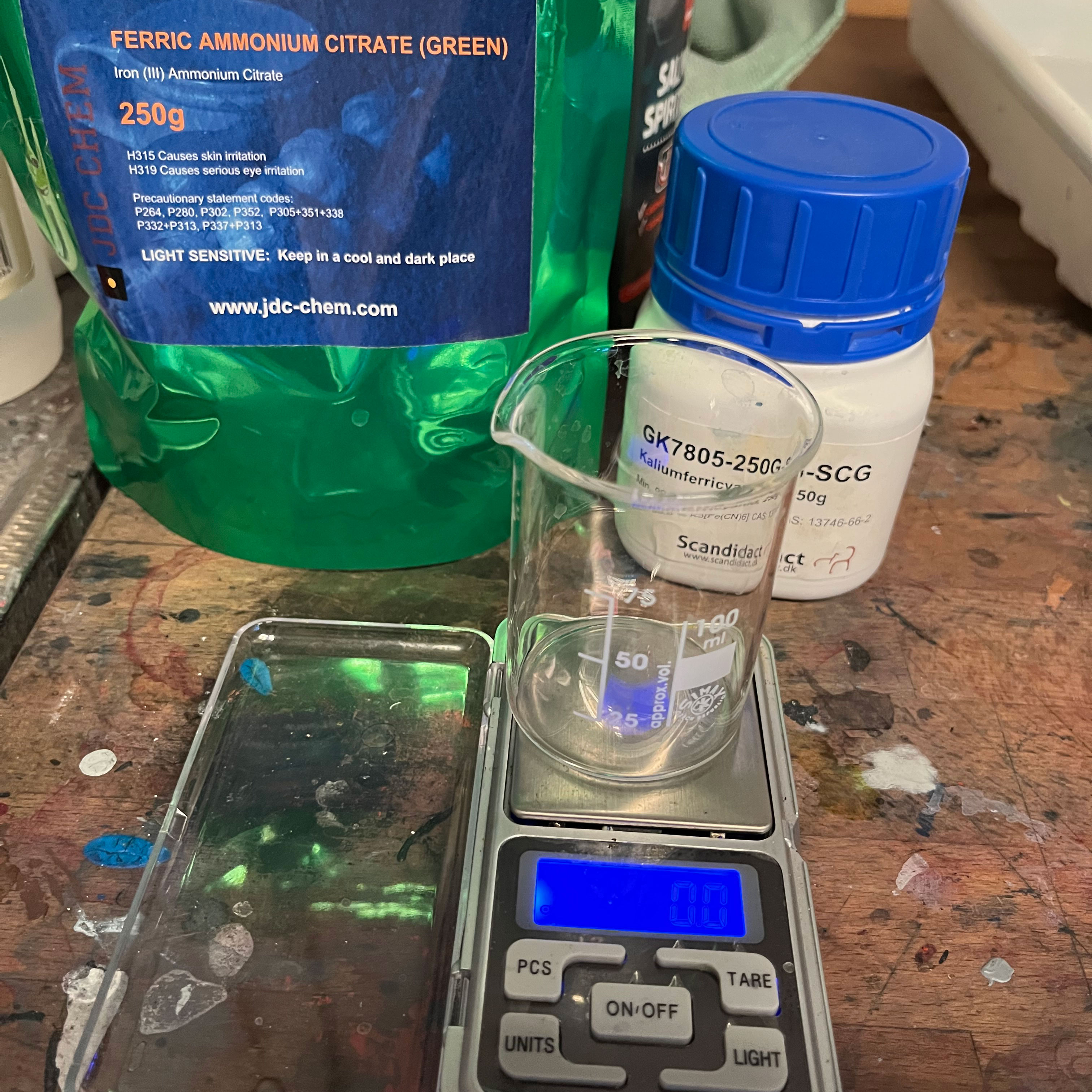
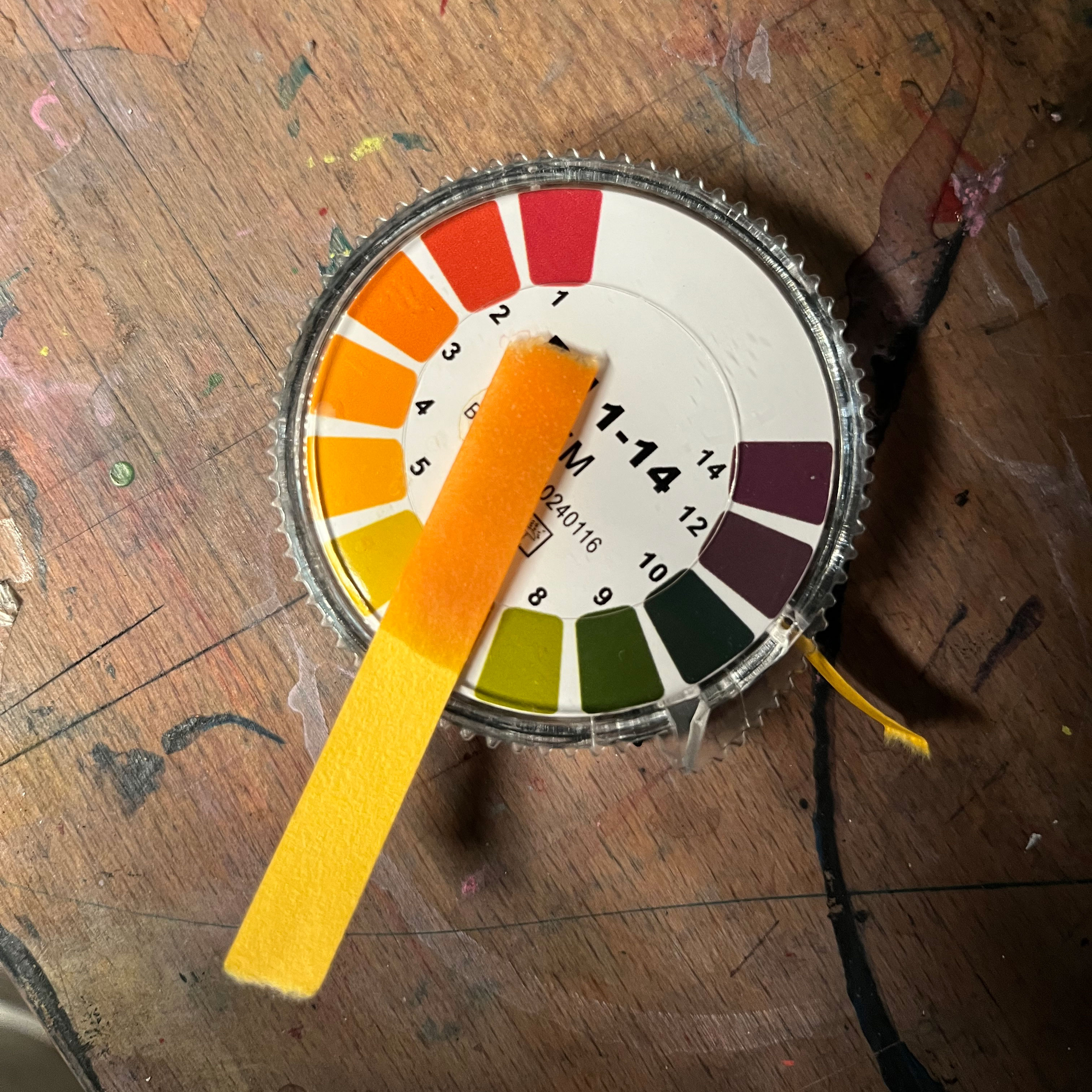
The cyanotype prints that are part of the exhibition Tracer Object were made by coating large sheets of white Habotai silk with a light-sensitive solution – equal parts ferric ammonium citrate and potassium ferricyanide. Sandwiched with transparencies of the tracesT5, T35, T32/69, T80 and T191, it was then exposed to UV light using a bespoke vacuum frame.
The choice of cyanotype had to do with how NASA’s beautiful digital images of stardust traces were somehow less impressive released from the internet, printed on a conventional printer. I felt that these images actually had to be traces of something in a medium, like the traces they convey in the image.
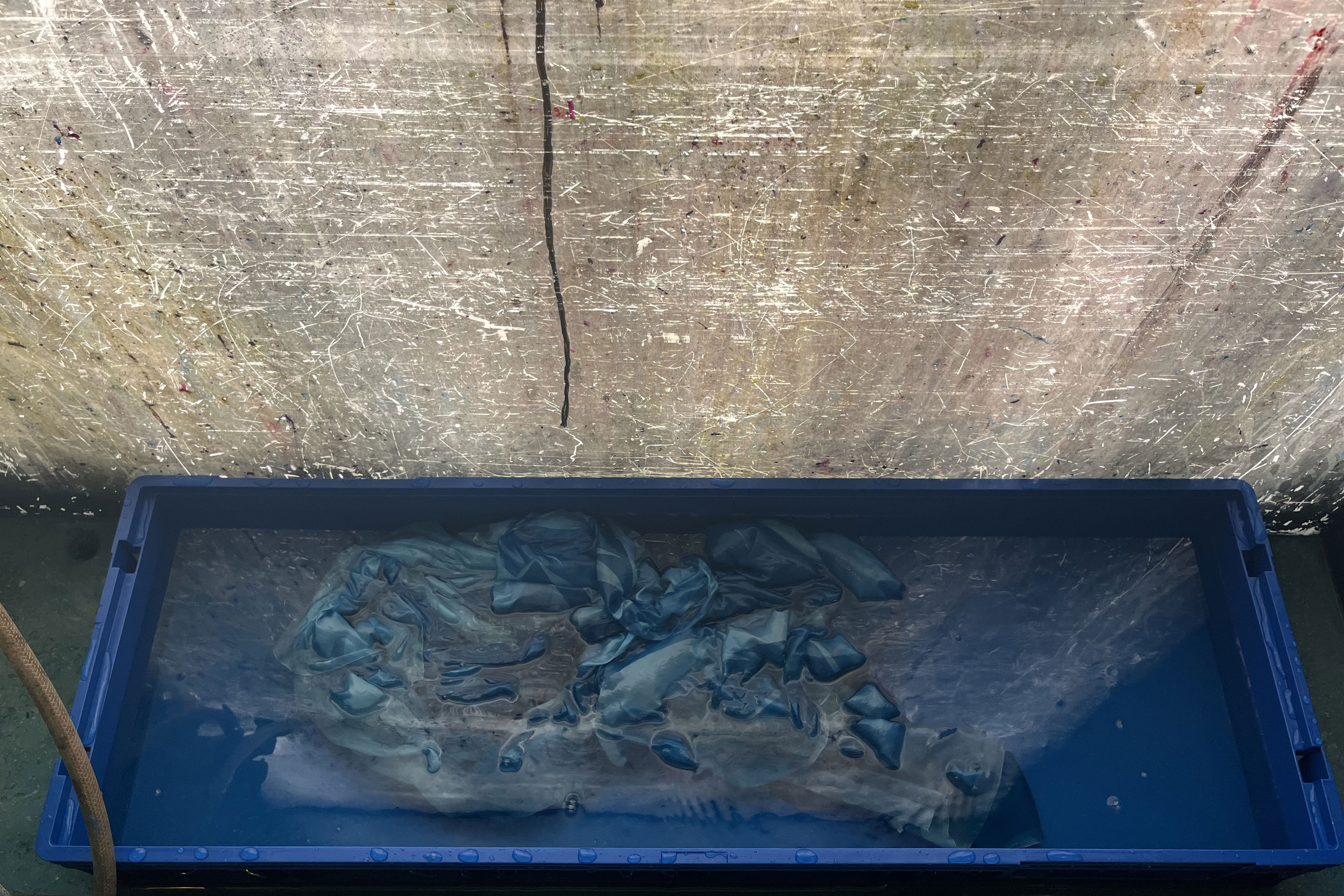
That meant that the kinds of traces the process would add became a matter of significance. Traces from uneven staining of the emulsion, for example, are hard to see as anything other than error. The traces that I settled on in this analogue printing process came from the folds in the silk during the exposure. For this to happen, the silks were intentionally made 80 centimetres too long for the frame. Given this extra material, it became both possible and necessary to fold, pad, and sometimes gently inflate the projection surface – the silk – which introduced a kind of depth and spatial animation into the image. This was amplified once the silk was hung in the exhibition space by the liveness of the material.
I think the imprint from outer space was given an internal space in these new prints materially analogous to, effectively homologous to, the technological process required to make the source image. This foregrounding of technological process is a reference to all technologies that surround us, not just science imagery. In so much of our daily lives we’re presented with a mediated world where these processes are not available to us.
The image is turned into a kind of embedded log of the technological history of the image, where, even if the only extra traces you see are those made by the vacuum frame, I think the entire history of NASA’s mission is somehow opened for a creative anatomisation. Where there was once microscopy of a grain of cosmic dust, there is now also the space craft, the collector grid, the aerogel, Dr Keiko Messenger in the lab, the microscope, static eliminators together with my vacuum frame.
The cyanotype prints that are part of the exhibition Tracer Object were made by coating large sheets of white Habotai silk with a light-sensitive solution – equal parts ferric ammonium citrate and potassium ferricyanide. Sandwiched with transparencies of the tracesT5, T35, T32/69, T80 and T191, it was then exposed to UV light using a bespoke vacuum frame.
The choice of cyanotype had to do with how NASA’s beautiful digital images of stardust traces were somehow less impressive released from the internet, printed on a conventional printer. I felt that these images actually had to be traces of something in a medium, like the traces they convey in the image.
That meant that the kinds of traces the process would add became a matter of significance. Traces from uneven staining of the emulsion, for example, are hard to see as anything other than error. The traces that I settled on in this analogue printing process came from the folds in the silk during the exposure. For this to happen, the silks were intentionally made 80 centimetres too long for the frame. Given this extra material, it became both possible and necessary to fold, pad, and sometimes gently inflate the projection surface – the silk – which introduced a kind of depth and spatial animation into the image. This was amplified once the silk was hung in the exhibition space by the liveness of the material.
I think the imprint from outer space was given an internal space in these new prints materially analogous to, effectively homologous to, the technological process required to make the source image. This foregrounding of technological process is a reference to all technologies that surround us, not just science imagery. In so much of our daily lives we’re presented with a mediated world where these processes are not available to us.
The image is turned into a kind of embedded log of the technological history of the image, where, even if the only extra traces you see are those made by the vacuum frame, I think the entire history of NASA’s mission is somehow opened for a creative anatomisation. Where there was once microscopy of a grain of cosmic dust, there is now also the space craft, the collector grid, the aerogel, Dr Keiko Messenger in the lab, the microscope, static eliminators together with my vacuum frame.
The cyanotype prints that are part of the exhibition Tracer Object were made by coating large sheets of white Habotai silk with a light-sensitive solution – equal parts ferric ammonium citrate and potassium ferricyanide. Sandwiched with transparencies of the tracesT5, T35, T32/69, T80 and T191, it was then exposed to UV light using a bespoke vacuum frame.
The choice of cyanotype had to do with how NASA’s beautiful digital images of stardust traces were somehow less impressive released from the internet, printed on a conventional printer. I felt that these images actually had to be traces of something in a medium, like the traces they convey in the image.
That meant that the kinds of traces the process would add became a matter of significance. Traces from uneven staining of the emulsion, for example, are hard to see as anything other than error. The traces that I settled on in this analogue printing process came from the folds in the silk during the exposure. For this to happen, the silks were intentionally made 80 centimetres too long for the frame. Given this extra material, it became both possible and necessary to fold, pad, and sometimes gently inflate the projection surface – the silk – which introduced a kind of depth and spatial animation into the image. This was amplified once the silk was hung in the exhibition space by the liveness of the material.
I think the imprint from outer space was given an internal space in these new prints materially analogous to, effectively homologous to, the technological process required to make the source image. This foregrounding of technological process is a reference to all technologies that surround us, not just science imagery. In so much of our daily lives we’re presented with a mediated world where these processes are not available to us.
The image is turned into a kind of embedded log of the technological history of the image, where, even if the only extra traces you see are those made by the vacuum frame, I think the entire history of NASA’s mission is somehow opened for a creative anatomisation. Where there was once microscopy of a grain of cosmic dust, there is now also the space craft, the collector grid, the aerogel, Dr Keiko Messenger in the lab, the microscope, static eliminators together with my vacuum frame.
THANKS TO
Kevin Malcolm
Photographer (Heirloom)
NASA's Stardust Sample Collection
NASA's Stardust Sample Collection
Archive
Archive
THANKS
Kevin Malcolm
Photographer (Heirloom)
NASA's Stardust Sample Collection
Archive