TRACER OBJECT
TRACER OBJECT
WHAT
WHAT
WHAT
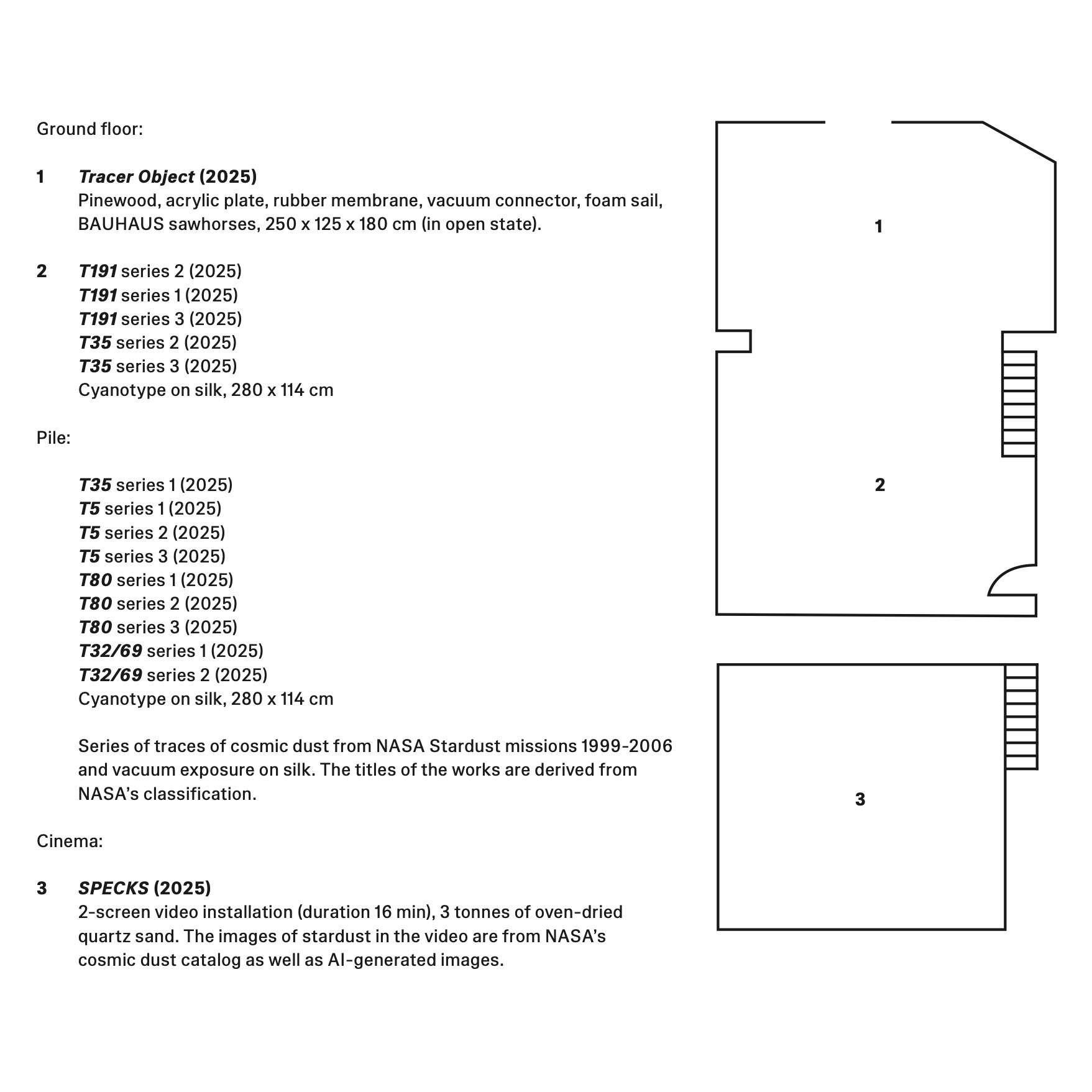
Solo show featuring 3 series of cyanotype on silk T5, T32/69, T35, T80, T191, Tracer Object (vacuum frame), and a two screen video installation SPECKS.
Solo show featuring 3 series of cyanotype on silk T5, T32/69, T35, T80, T191, Tracer Object (vacuum frame), and a two screen video installation SPECKS.
Solo show featuring 3 series of cyanotype on silk T5, T32/69, T35, T80, T191, Tracer Object (vacuum frame), and a two screen video installation SPECKS.
WHEN
WHEN
WHEN
Feb, 2025
Feb, 2025
Feb, 2025
About
About
About
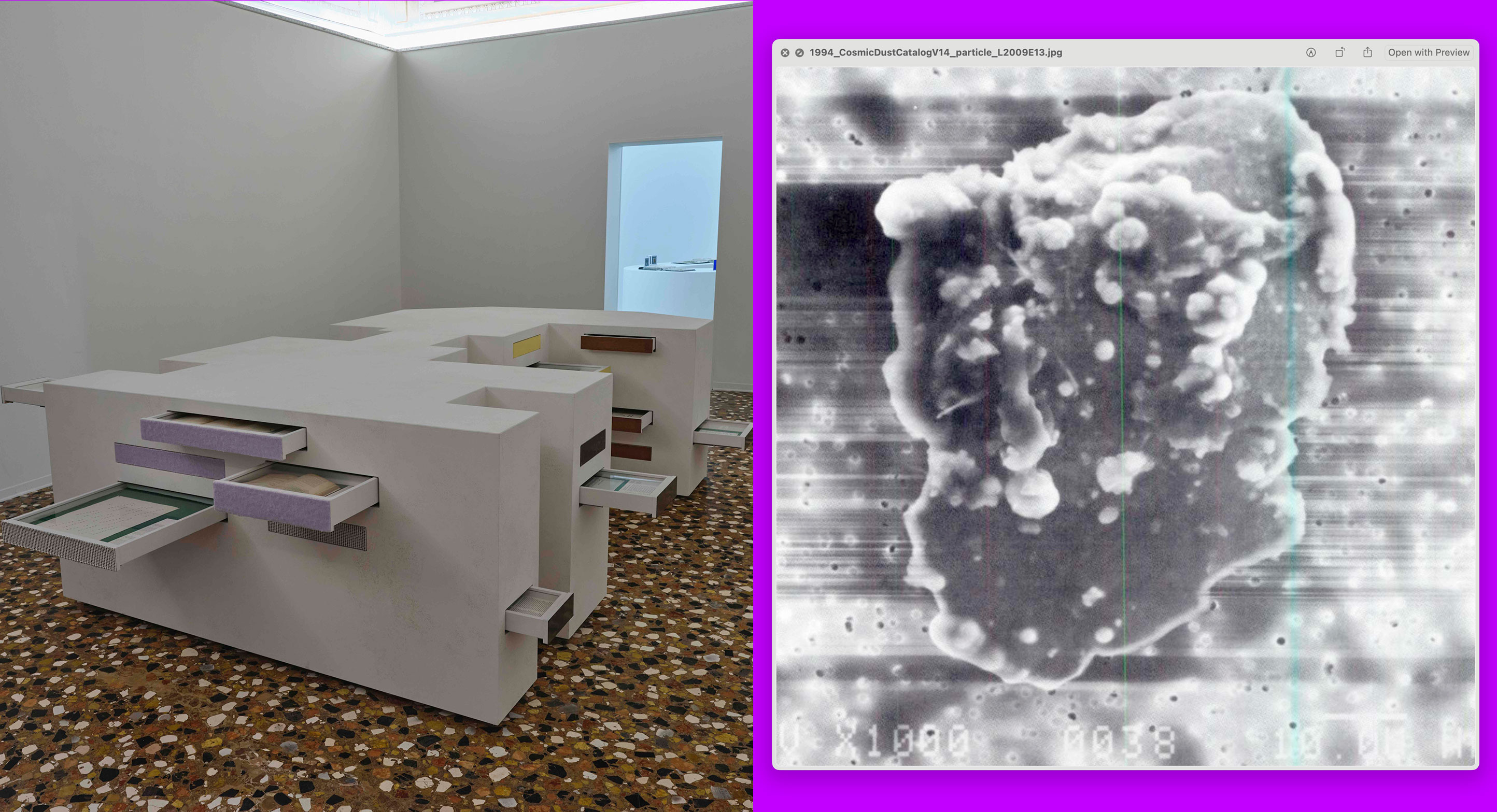
The exhibition Tracer Object is an assembly of works that trace our cosmic origins and the technologies we engineer to try and understand them. Traces of cosmic dust, space travel, photocopiers, early digital compression and machine learning overlap and entangle to form new hierarchies of interpretation in the work.
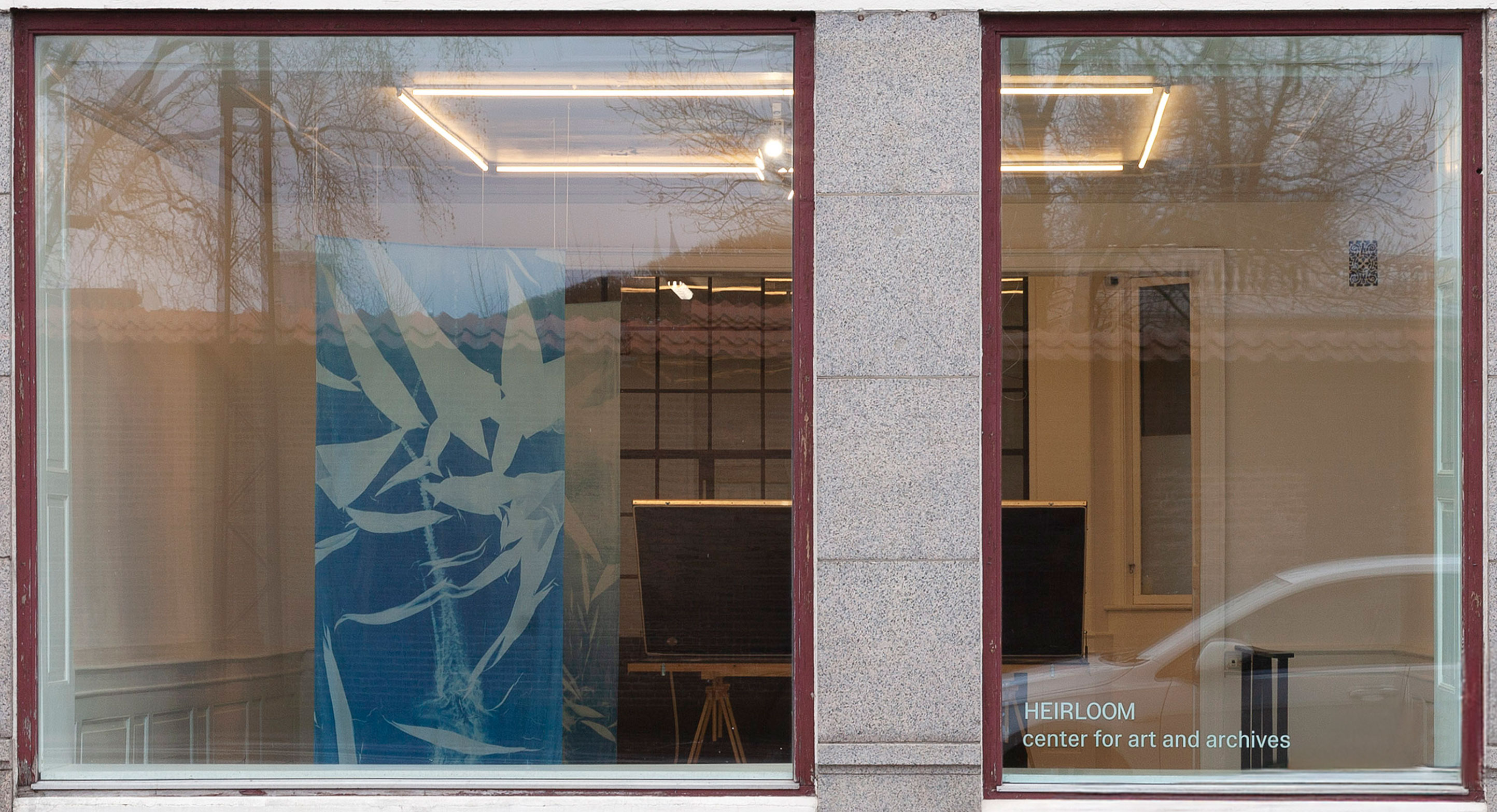
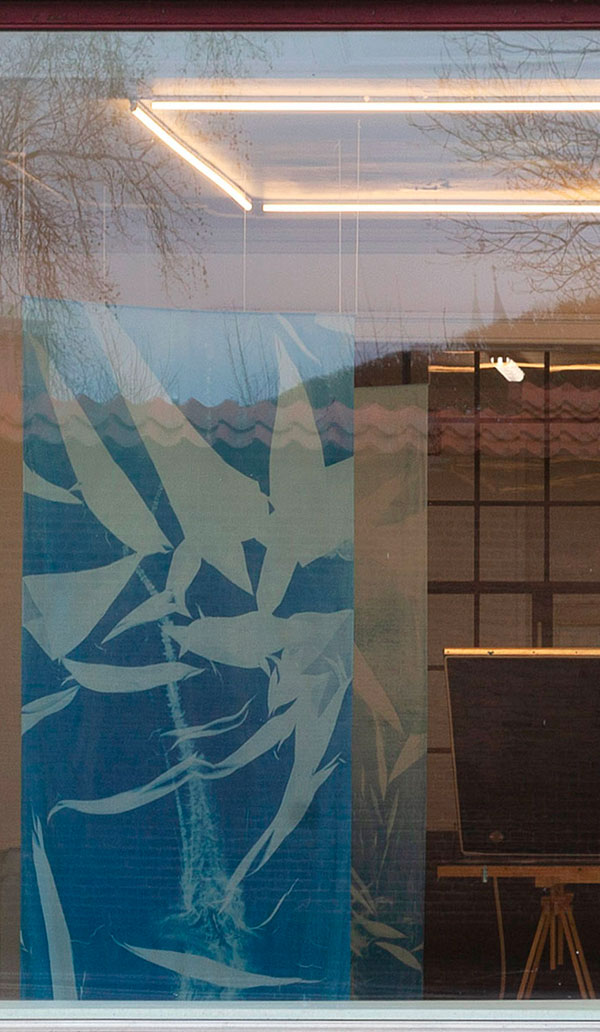
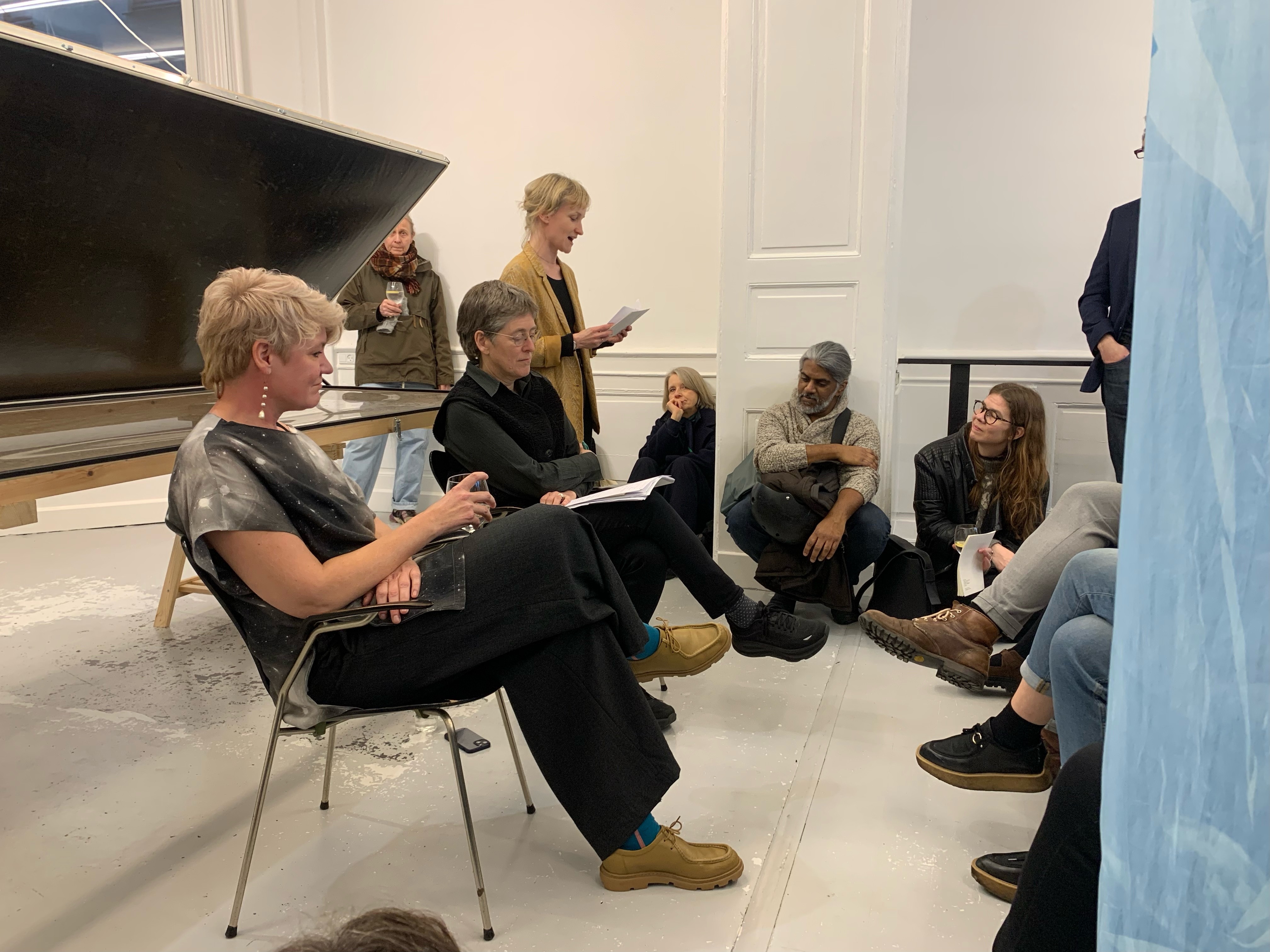
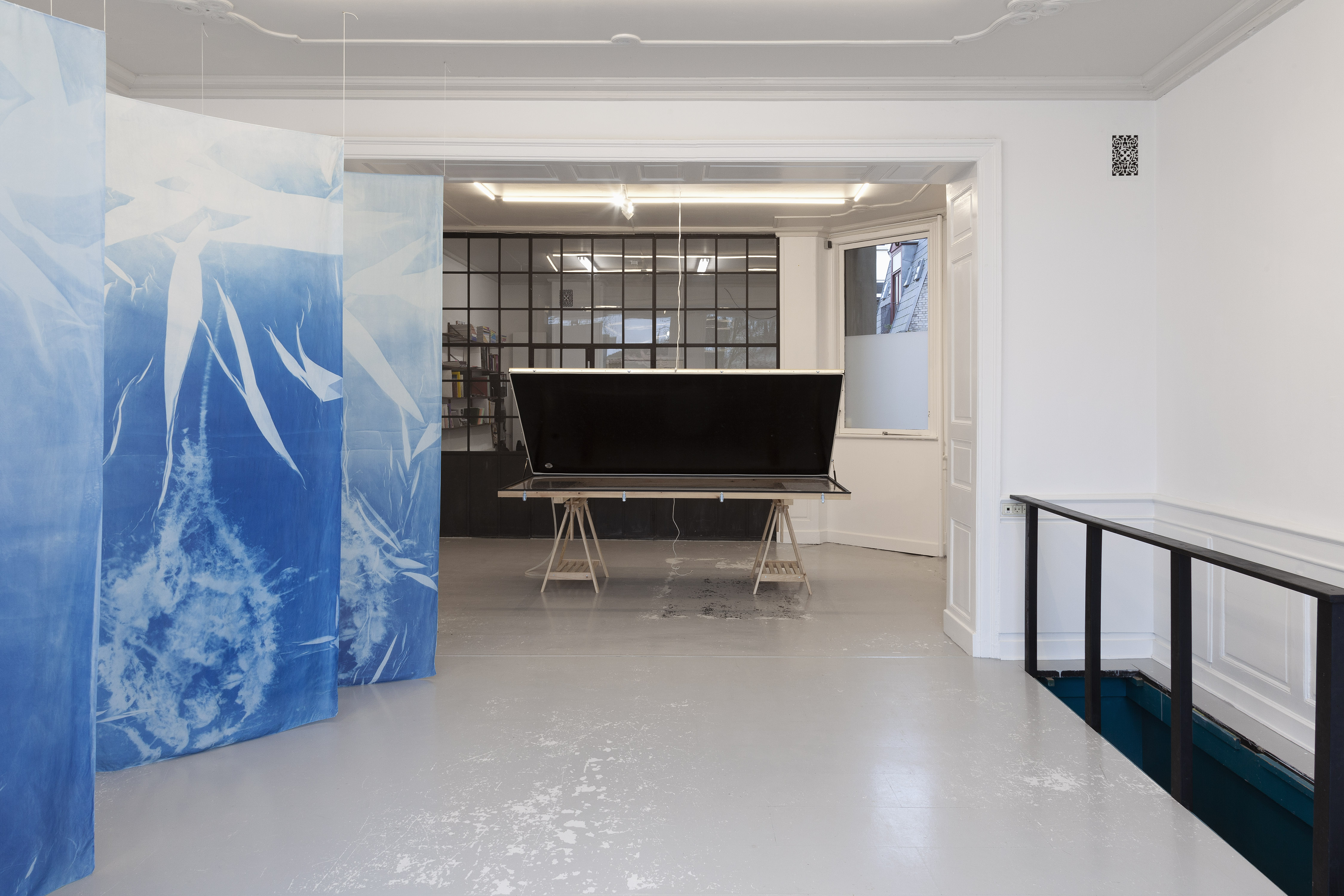
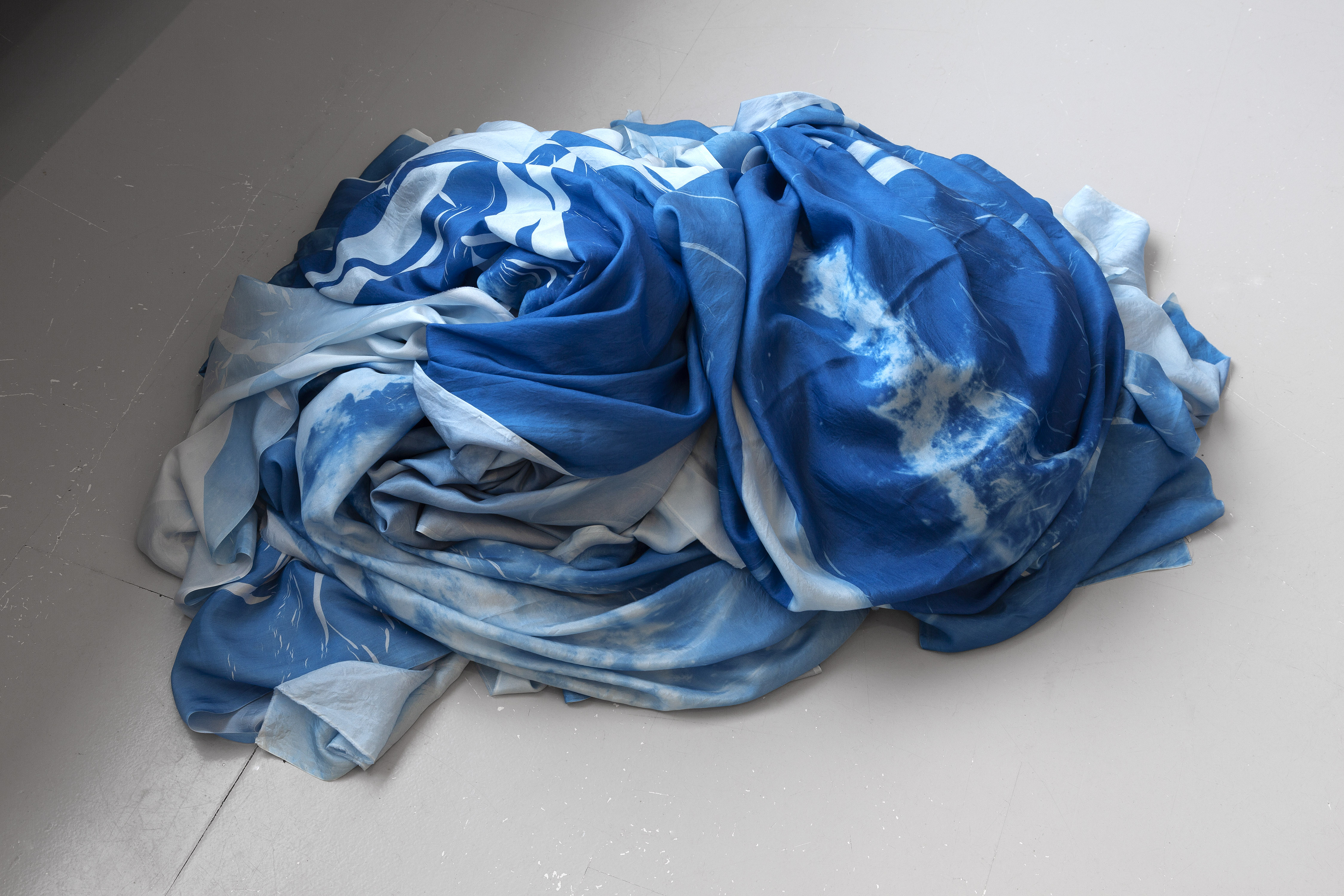
In T-series, a series of cyanotype prints on silk were exhibited on the ground floor. Some were hung from the ceiling like short animation sequences, others were left on the floor in a pile. Some traces in these prints were made by cosmic dust that NASA collected from space in 2006, and others by the bespoke vacuum frame on display beside the prints. This pairing of trace and tracer, print and printer, unfolds the cosmic and technological histories embedded in NASA’s images of stardust. In a sense, the making of these cyanotypes began more than twenty years ago and extends to the present in this art–science collaboration.
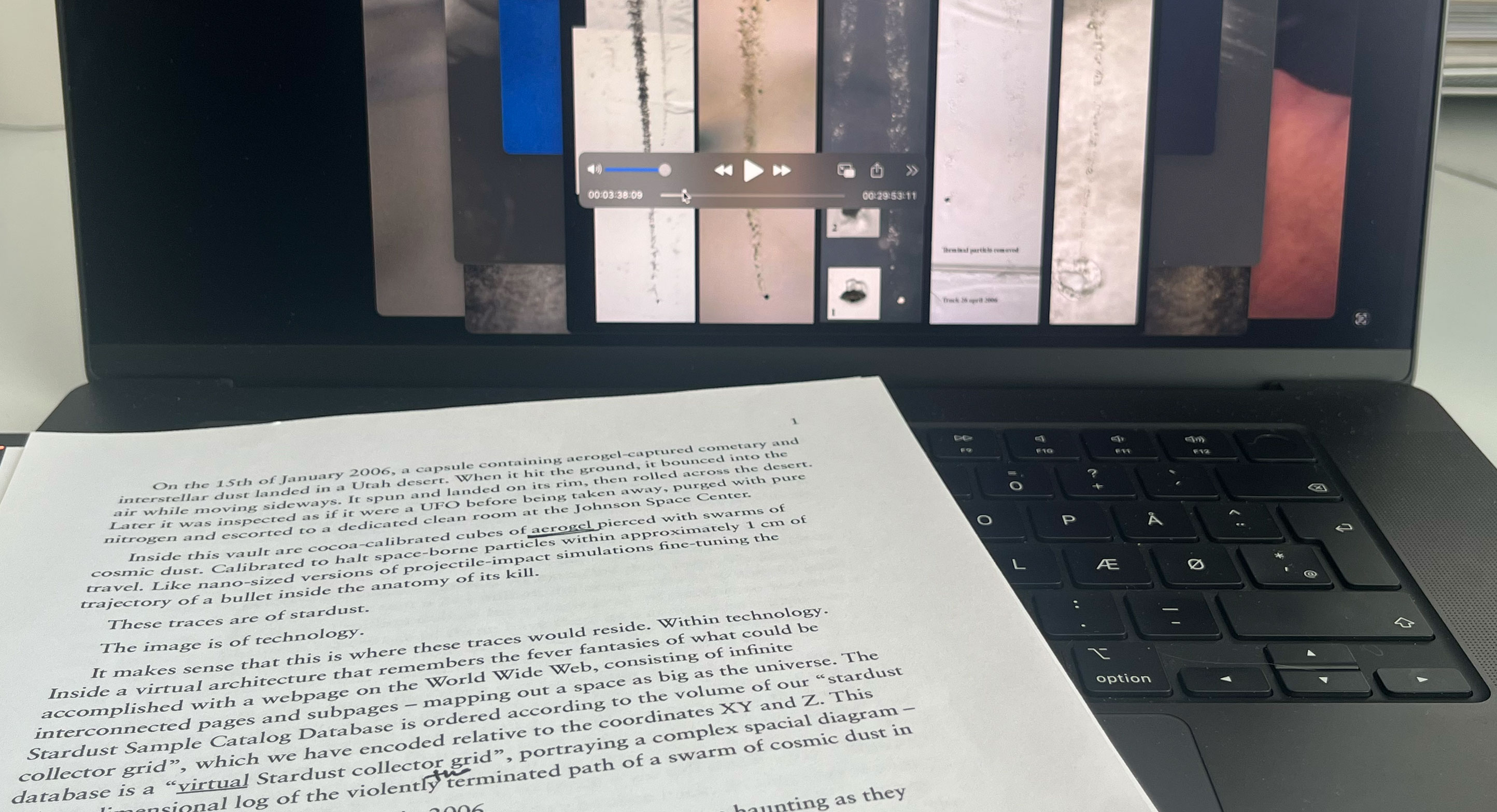
In the video installation SPECKS, two screens are placed in a field of sand. The work moves through iterations of specks, from grains of sand to particles from NASA’s cosmic dust collection, and holds fleeting images against the deep time of geological and cosmic matter. By linking silicon’s cosmic origin in exploding supernovae to its earthly habitat in computational infrastructure, the work reflects on the limits of representation and foregrounds the structural implications of seeing the world through technological mediation.
The exhibition Tracer Object is an assembly of works that trace our cosmic origins and the technologies we engineer to try and understand them. Traces of cosmic dust, space travel, photocopiers, early digital compression and machine learning overlap and entangle to form new hierarchies of interpretation in the work.
In T-series, a series of cyanotype prints on silk were exhibited on the ground floor. Some were hung from the ceiling like short animation sequences, others were left on the floor in a pile. Some traces in these prints were made by cosmic dust that NASA collected from space in 2006, and others by the bespoke vacuum frame on display beside the prints. This pairing of trace and tracer, print and printer, unfolds the cosmic and technological histories embedded in NASA’s images of stardust. In a sense, the making of these cyanotypes began more than twenty years ago and extends to the present in this art–science collaboration.
In the video installation SPECKS, two screens are placed in a field of sand. The work moves through iterations of specks, from grains of sand to particles from NASA’s cosmic dust collection, and holds fleeting images against the deep time of geological and cosmic matter. By linking silicon’s cosmic origin in exploding supernovae to its earthly habitat in computational infrastructure, the work reflects on the limits of representation and foregrounds the structural implications of seeing the world through technological mediation.
The exhibition Tracer Object is an assembly of works that trace our cosmic origins and the technologies we engineer to try and understand them. Traces of cosmic dust, space travel, photocopiers, early digital compression and machine learning overlap and entangle to form new hierarchies of interpretation in the work.
In T-series, a series of cyanotype prints on silk were exhibited on the ground floor. Some were hung from the ceiling like short animation sequences, others were left on the floor in a pile. Some traces in these prints were made by cosmic dust that NASA collected from space in 2006, and others by the bespoke vacuum frame on display beside the prints. This pairing of trace and tracer, print and printer, unfolds the cosmic and technological histories embedded in NASA’s images of stardust. In a sense, the making of these cyanotypes began more than twenty years ago and extends to the present in this art–science collaboration.
In the video installation SPECKS, two screens are placed in a field of sand. The work moves through iterations of specks, from grains of sand to particles from NASA’s cosmic dust collection, and holds fleeting images against the deep time of geological and cosmic matter. By linking silicon’s cosmic origin in exploding supernovae to its earthly habitat in computational infrastructure, the work reflects on the limits of representation and foregrounds the structural implications of seeing the world through technological mediation.
THANKS TO
Stine Hebert
Curator
Prof. Nina Wakeford
Prof. Nina Wakeford
in conversation
in conversation
Christopher McSherry
Christopher McSherry
Install
Install
Erik Medeiros
Erik Medeiros
Sound mixing
Sound mixing
Kevin Malcolm
Kevin Malcolm
Photographer
Photographer
SUPPORTED BY
SUPPORTED BY
THANKS
Stine Hebert
Curator
Prof. Nina Wakeford
in conversation
Christopher McSherry
Install
Erik Medeiros
Sound mixing