SPECKS
SPECKS
WHAT
WHAT
WHAT
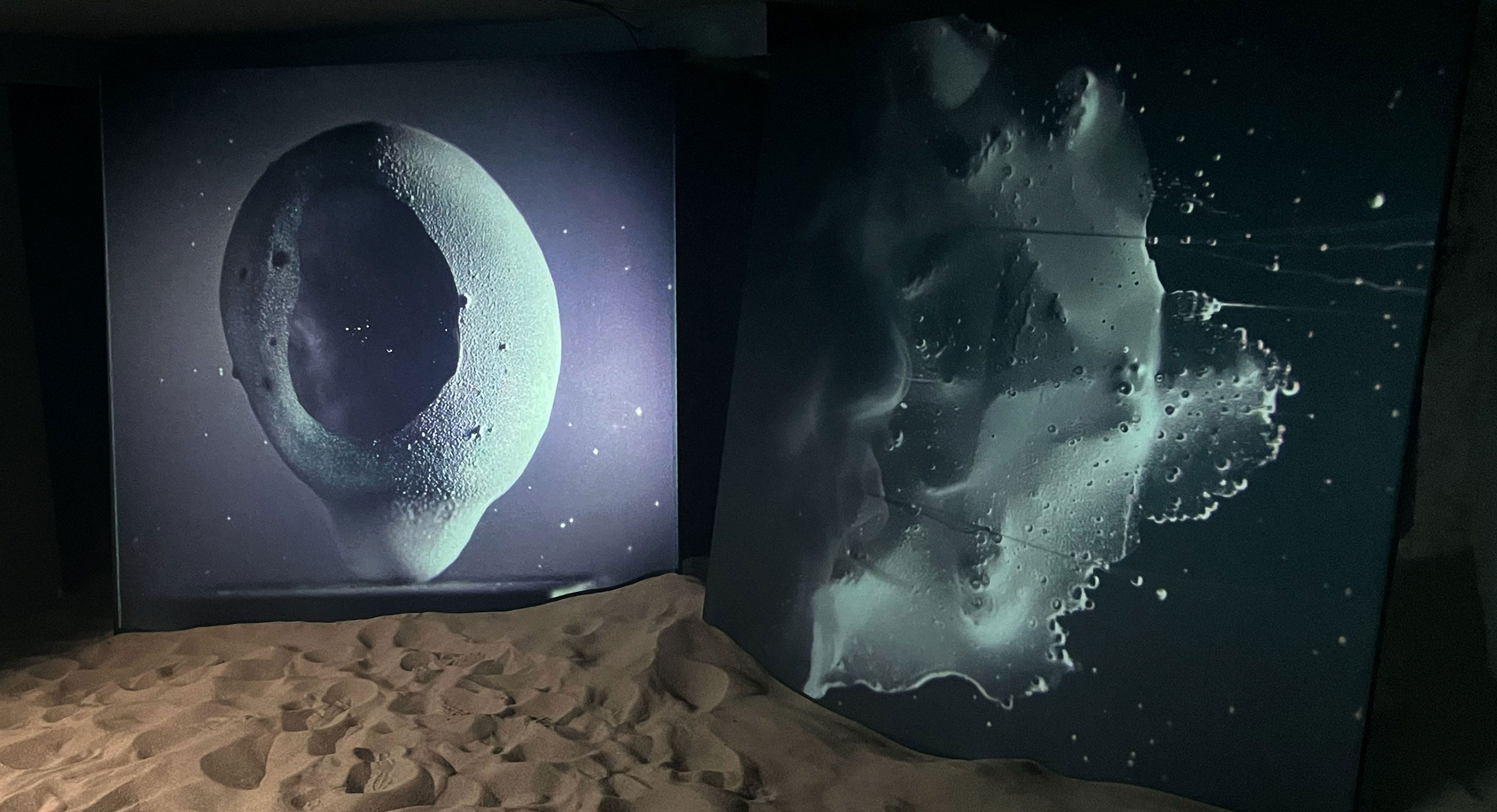
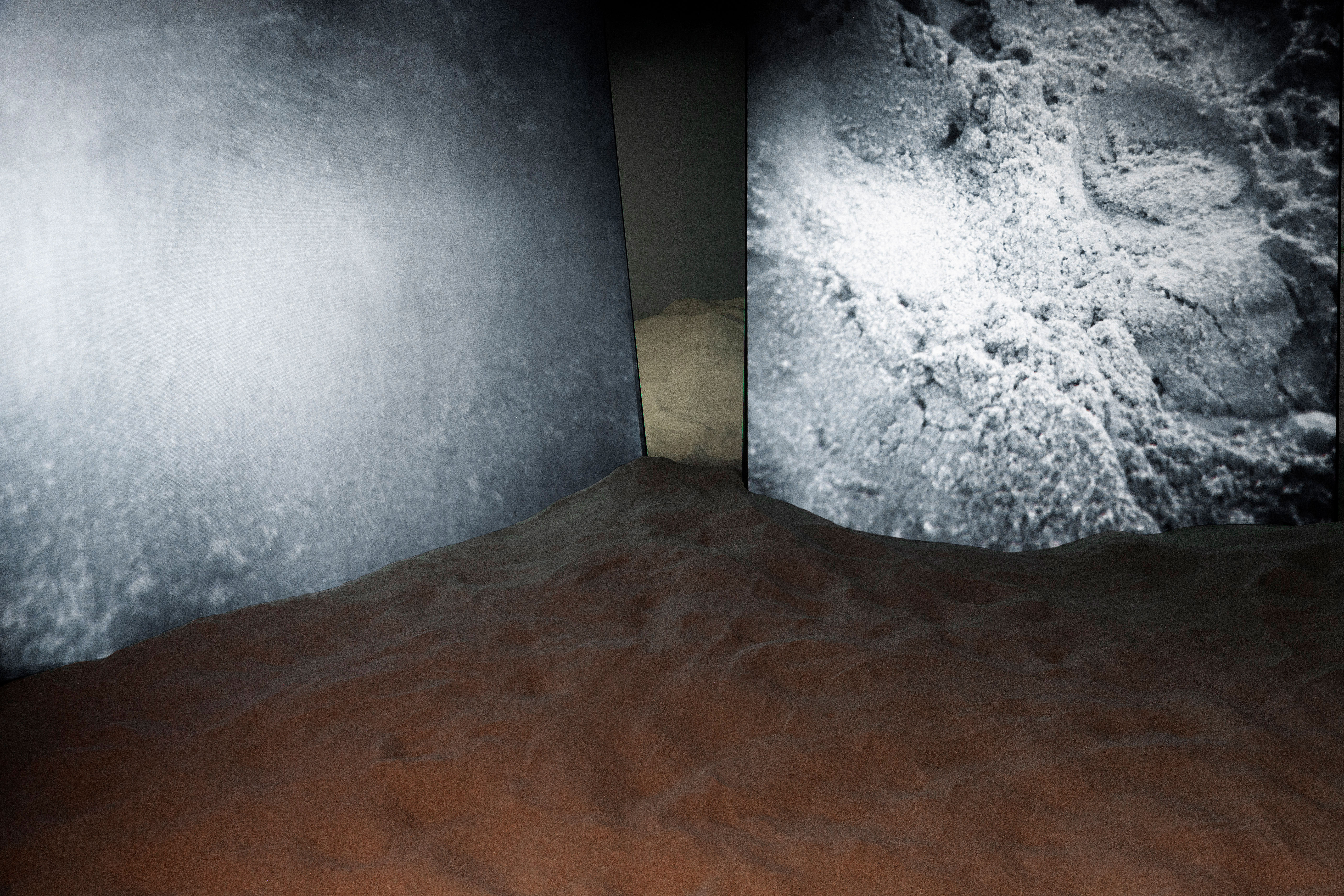
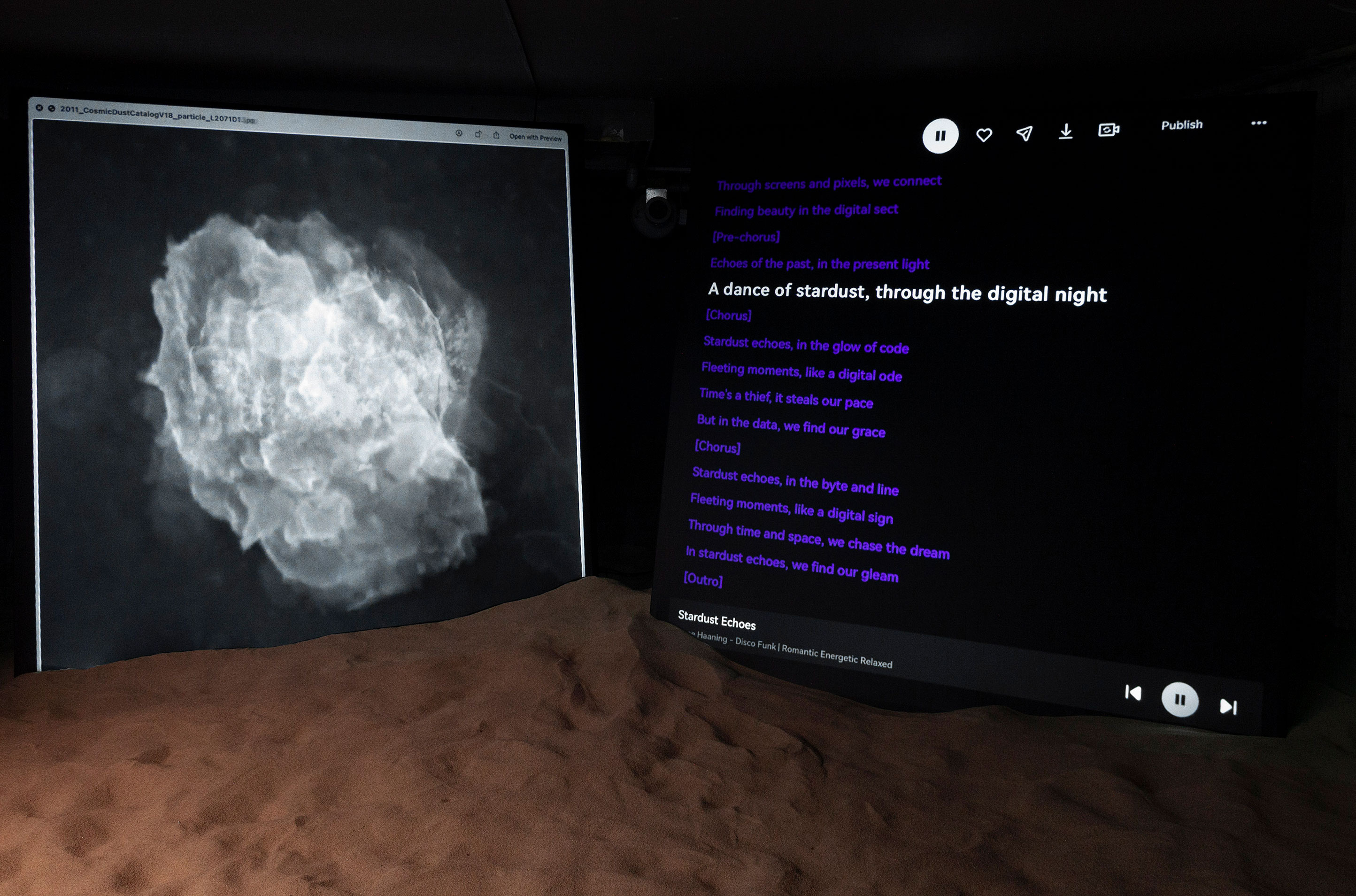
Two-channel video installation. Projection on black projection screens: 200 x 200 cm. 3 tons of sand. Duration: 17 mins.
Two-channel video installation. Projection on black projection screens: 200 x 200 cm. 3 tons of sand. Duration: 17 mins.
Two-channel video installation. Projection on black projection screens: 200 x 200 cm. 3 tons of sand. Duration: 17 mins.
WHEN
WHEN
WHEN
Feb, 2025
Feb, 2025
Feb, 2025
About
About
About
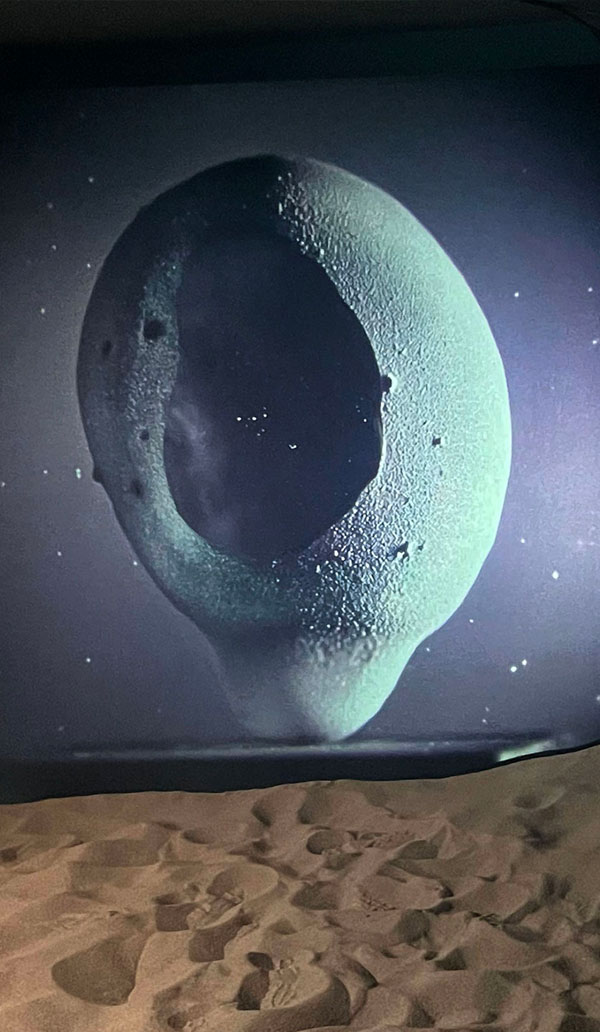
SPECKS is a two-channel video installation placed in three tonnes of sand connecting silicon's cosmic origins to its technological present. It was part of the exhibition Tracer Object.
Silicon is born inside of massive stars before being scattered throughout space by exploding supernovae. On its journey through space-time, it binds with oxygen to form silicate material. These materials make up much of the rocky material of planets like the Earth. We often see them as sand. When refined, silicon serves as a semiconductor inside microchips: a crucial element of the invisible infrastructure of computation.
I probably spend more time in proximity to silicon than I do to sand, despite its rarity in pure form. My wrists rest daily on the electrical charge running through my own small piece of it, too small and too complicated for me to understand if it were not concealed by the casing of my devices. Sometimes I do look up from my devices and encounter unprocessed cosmic matter, where scale is accounted for both by my line-of-sight and my body’s capacities, rather than the specs of my computer.
Representation has confessed its shortcomings throughout history: unable to convey even the palest shadow of the Infinite, it has resigned itself to incompetence in dealing with the transcendent, cursing our finitude. But if we listen carefully, we can hear the whispered murmurings of infinity immanent in even the smallest details. (Barad, ‘What Is the Measure of Nothingness? Infinity, Virtuality, Justice’)
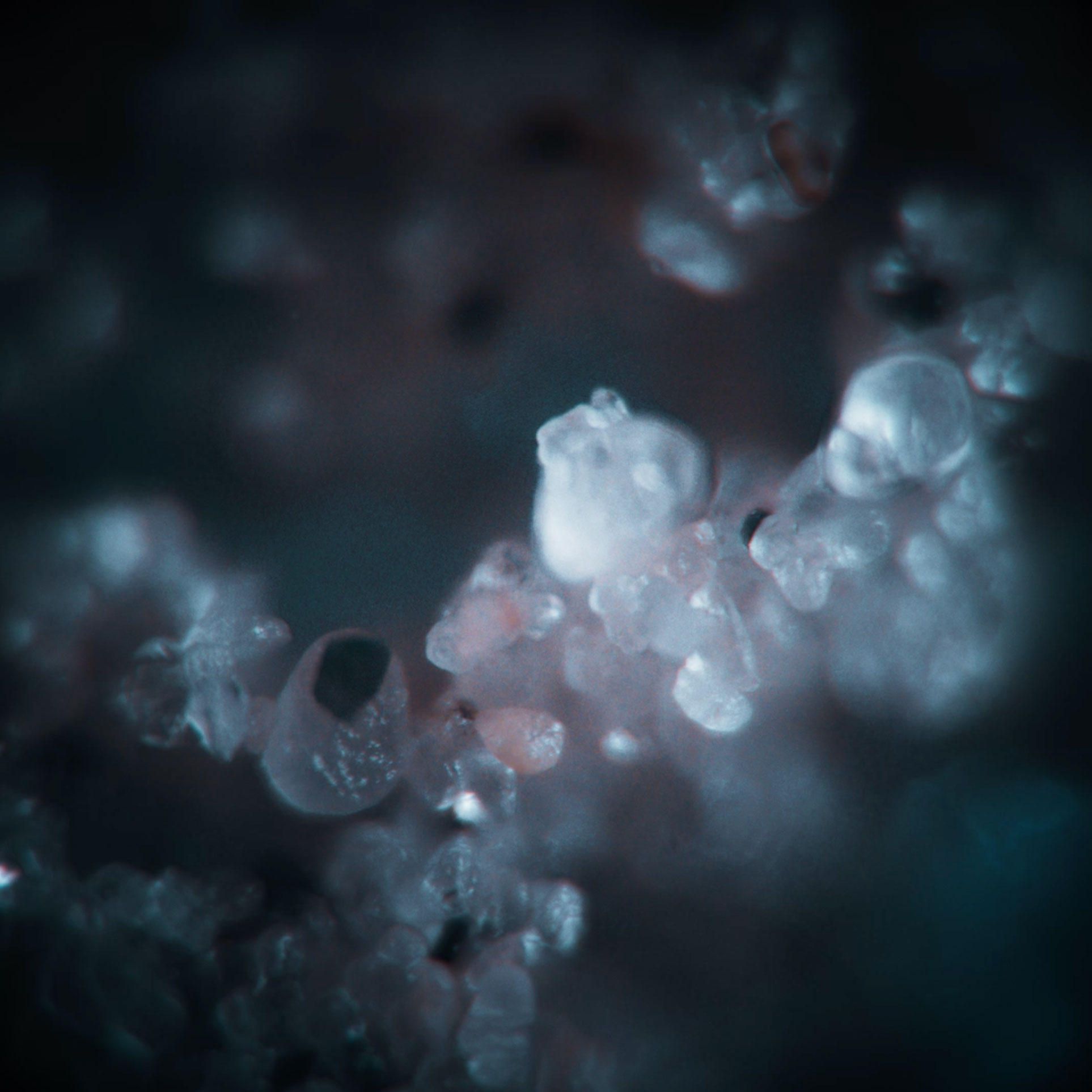
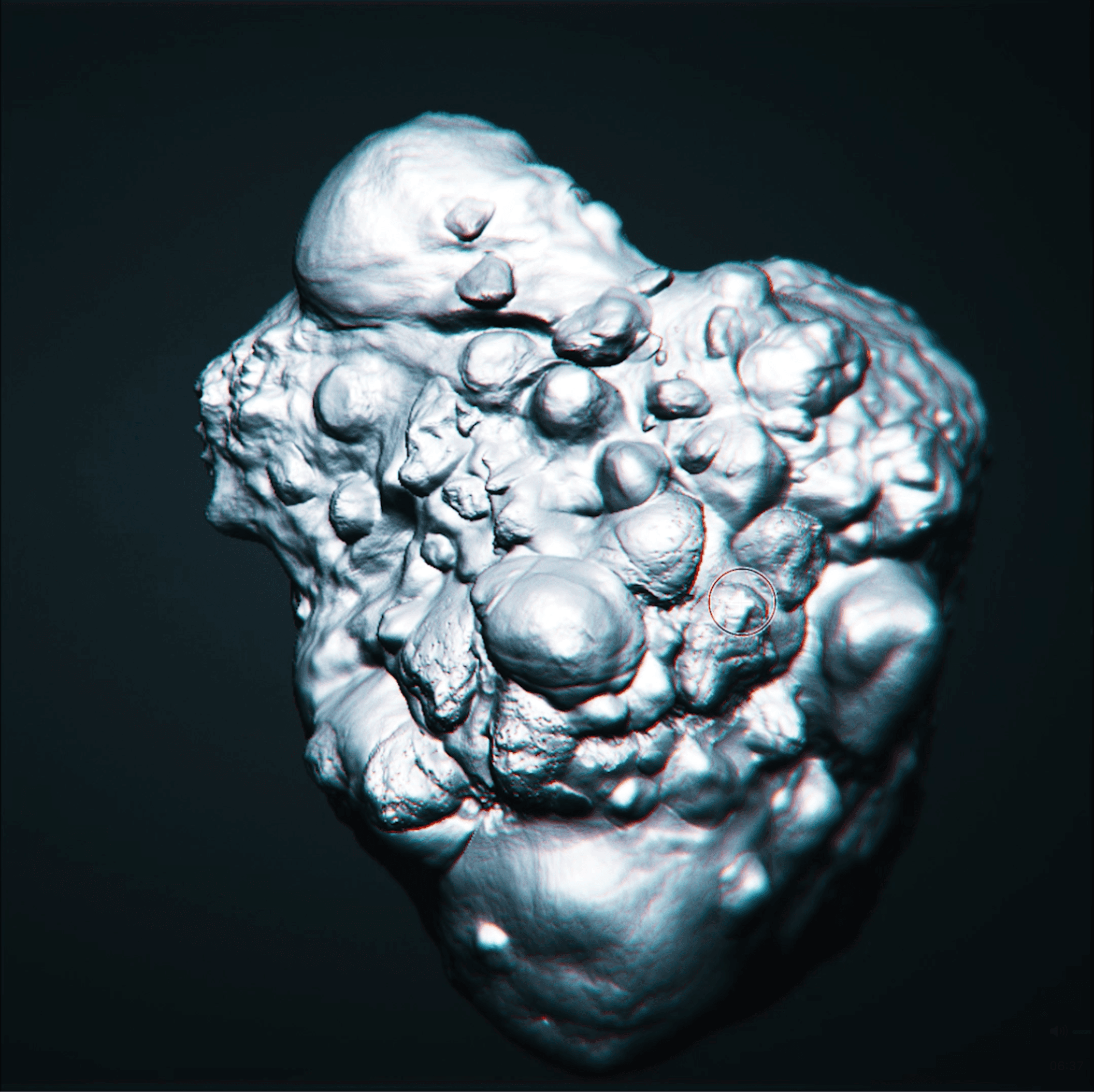
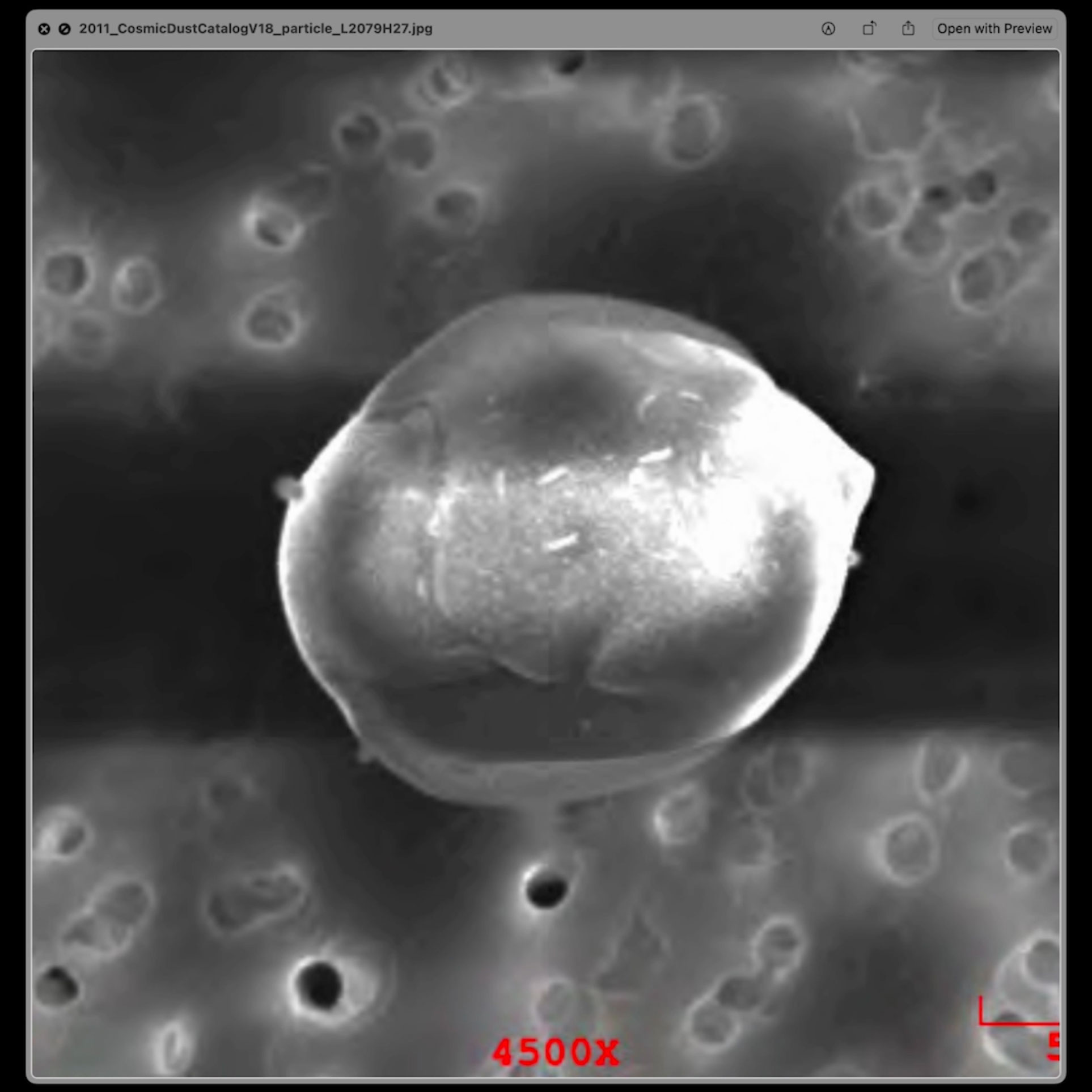
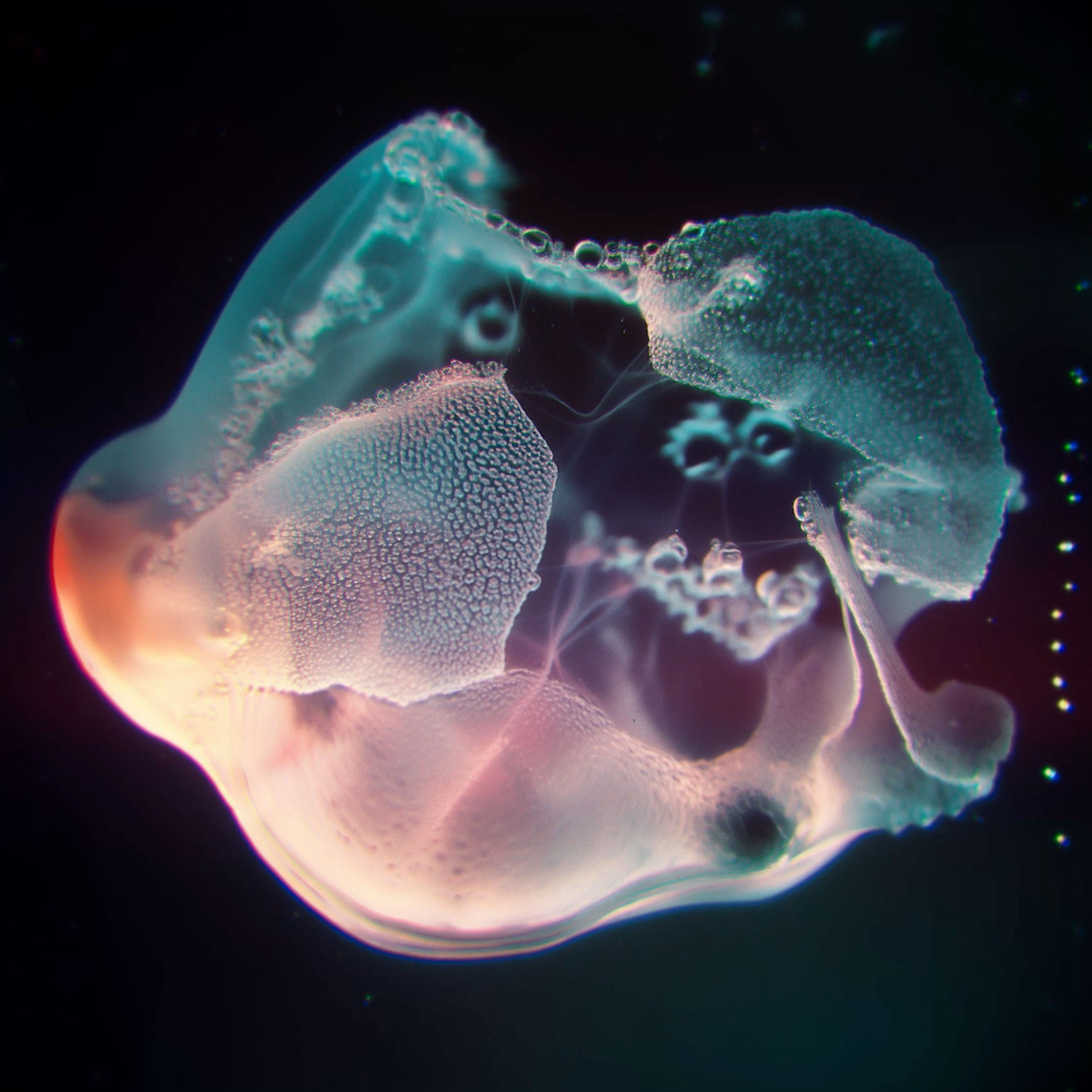
The many iterations of specks in the video are perhaps trying to grapple with these shortcomings. The matter they represent – the sand in specks, and the particles from NASA’s comic dust collection – offer, meanwhile, a kind of infinity that renders the human body and our technological inventions irrelevant. The video work holds transient images in contrast to this geological indifference and folds cosmic, technological, and geological timescales into a single field.
SPECKS is a two-channel video installation placed in three tonnes of sand connecting silicon's cosmic origins to its technological present. It was part of the exhibition Tracer Object.
Silicon is born inside of massive stars before being scattered throughout space by exploding supernovae. On its journey through space-time, it binds with oxygen to form silicate material. These materials make up much of the rocky material of planets like the Earth. We often see them as sand. When refined, silicon serves as a semiconductor inside microchips: a crucial element of the invisible infrastructure of computation.
I probably spend more time in proximity to silicon than I do to sand, despite its rarity in pure form. My wrists rest daily on the electrical charge running through my own small piece of it, too small and too complicated for me to understand if it were not concealed by the casing of my devices. Sometimes I do look up from my devices and encounter unprocessed cosmic matter, where scale is accounted for both by my line-of-sight and my body’s capacities, rather than the specs of my computer.
Representation has confessed its shortcomings throughout history: unable to convey even the palest shadow of the Infinite, it has resigned itself to incompetence in dealing with the transcendent, cursing our finitude. But if we listen carefully, we can hear the whispered murmurings of infinity immanent in even the smallest details. (Barad, ‘What Is the Measure of Nothingness? Infinity, Virtuality, Justice’)
The many iterations of specks in the video are perhaps trying to grapple with these shortcomings. The matter they represent – the sand in specks, and the particles from NASA’s comic dust collection – offer, meanwhile, a kind of infinity that renders the human body and our technological inventions irrelevant. The video work holds transient images in contrast to this geological indifference and folds cosmic, technological, and geological timescales into a single field.
SPECKS is a two-channel video installation placed in three tonnes of sand connecting silicon's cosmic origins to its technological present. It was part of the exhibition Tracer Object.
Silicon is born inside of massive stars before being scattered throughout space by exploding supernovae. On its journey through space-time, it binds with oxygen to form silicate material. These materials make up much of the rocky material of planets like the Earth. We often see them as sand. When refined, silicon serves as a semiconductor inside microchips: a crucial element of the invisible infrastructure of computation.
I probably spend more time in proximity to silicon than I do to sand, despite its rarity in pure form. My wrists rest daily on the electrical charge running through my own small piece of it, too small and too complicated for me to understand if it were not concealed by the casing of my devices. Sometimes I do look up from my devices and encounter unprocessed cosmic matter, where scale is accounted for both by my line-of-sight and my body’s capacities, rather than the specs of my computer.
Representation has confessed its shortcomings throughout history: unable to convey even the palest shadow of the Infinite, it has resigned itself to incompetence in dealing with the transcendent, cursing our finitude. But if we listen carefully, we can hear the whispered murmurings of infinity immanent in even the smallest details. (Barad, ‘What Is the Measure of Nothingness? Infinity, Virtuality, Justice’)
The many iterations of specks in the video are perhaps trying to grapple with these shortcomings. The matter they represent – the sand in specks, and the particles from NASA’s comic dust collection – offer, meanwhile, a kind of infinity that renders the human body and our technological inventions irrelevant. The video work holds transient images in contrast to this geological indifference and folds cosmic, technological, and geological timescales into a single field.
THANKS TO
Stine Hebert
Curator
Erik Medeiros
Erik Medeiros
Sound Mixing
Sound Mixing
Christopher McSherry
Christopher McSherry
Install
Install
SUPPORTED BY
SUPPORTED BY
THANKS
Stine Hebert
Curator
Erik Medeiros
Sound Mixing
Christopher McSherry
Install