Tracer Object (vacuum frame)
Tracer Object (vacuum frame)
WHAT
WHAT
WHAT
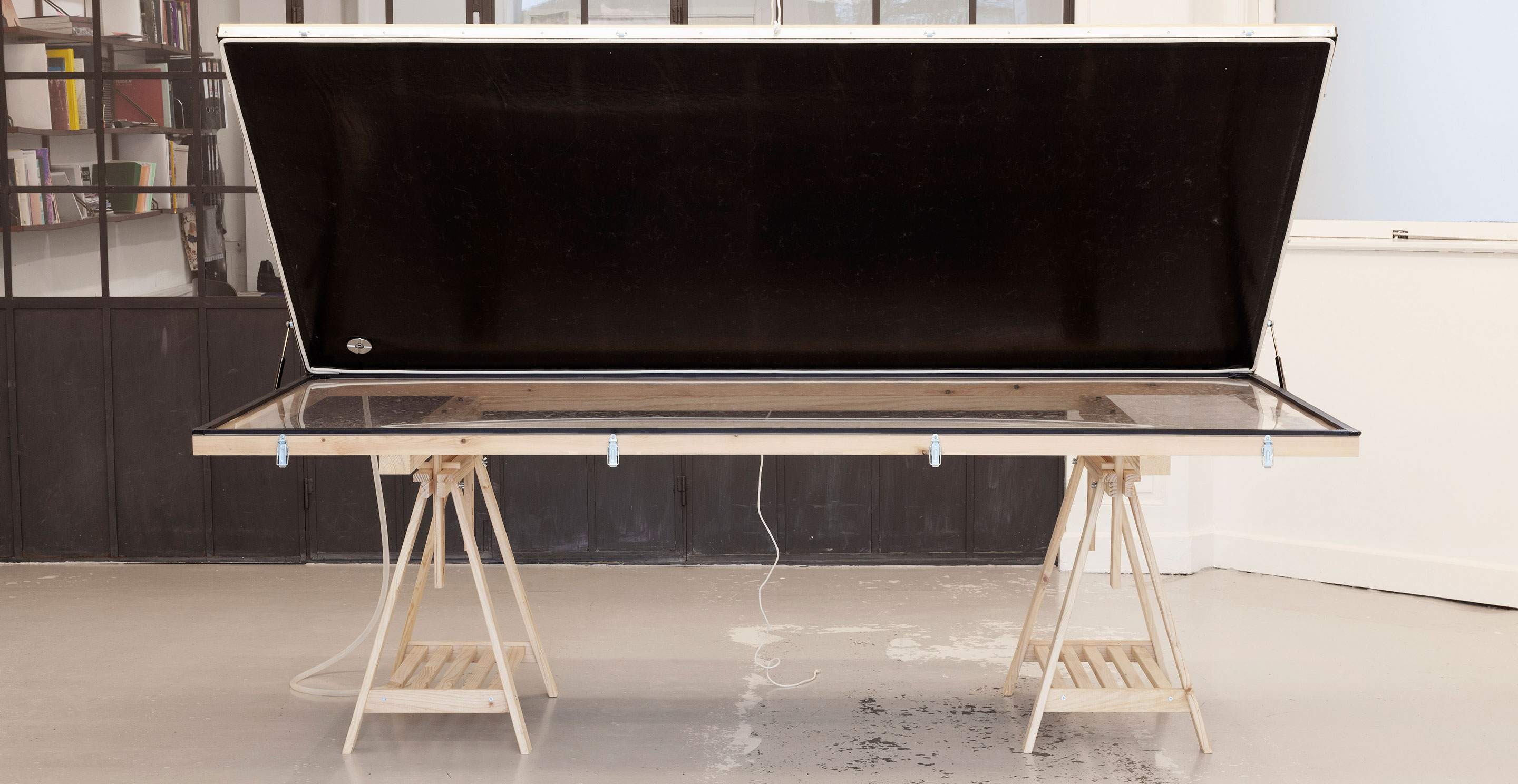
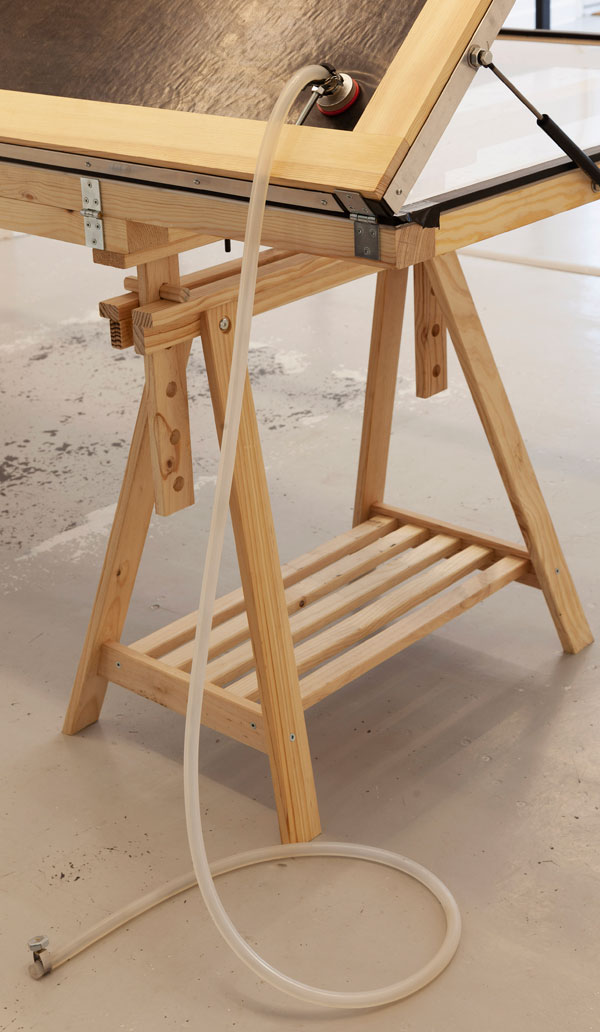
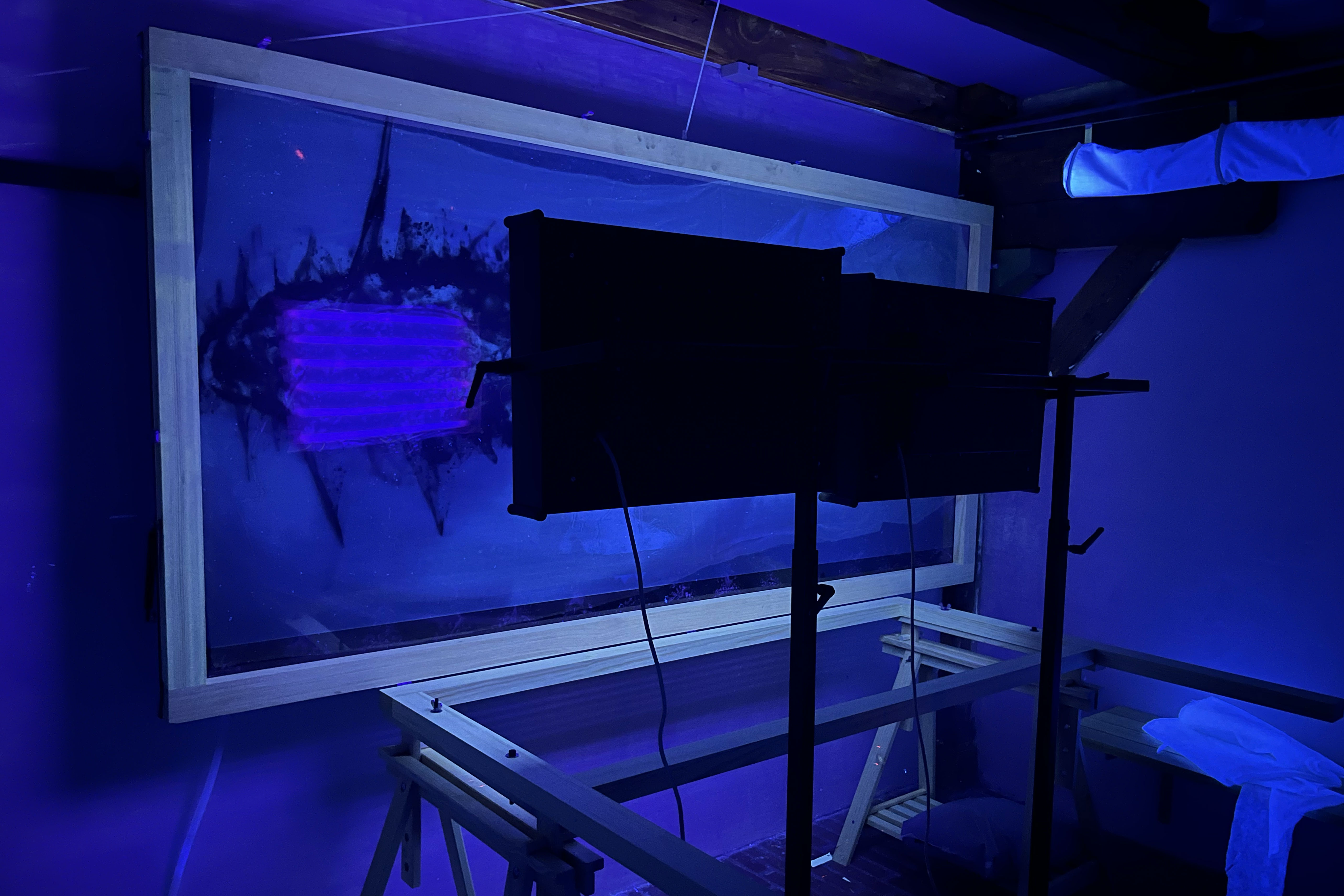
Pinewood, acrylic plate, rubber membrane, vacuum connector, IKEA trestles, 250 × 125 × 180 cm (in open state). Part for the exhibition Tracer Object.
Pinewood, acrylic plate, rubber membrane, vacuum connector, IKEA trestles, 250 × 125 × 180 cm (in open state). Part for the exhibition Tracer Object.
Pinewood, acrylic plate, rubber membrane, vacuum connector, IKEA trestles, 250 × 125 × 180 cm (in open state). Part for the exhibition Tracer Object.
WHEN
WHEN
WHEN
Feb, 2025
Feb, 2025
Feb, 2025
About
About
About
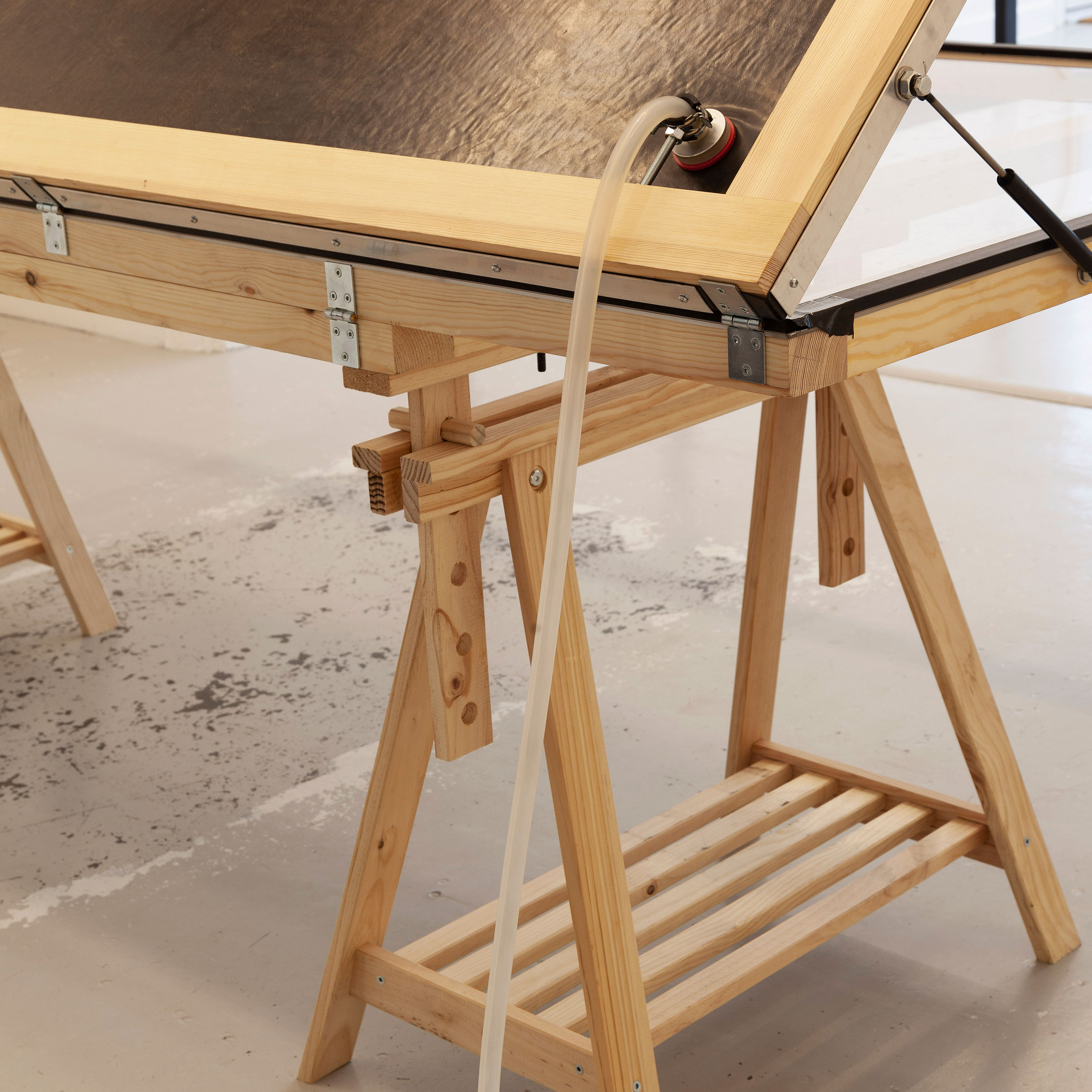
This vacuum frame is built from pine. Pine is cheap and accessible, particularly in Scandinavia, and for this reason alludes to affiliation with IKEA. You’re meant to feel like you could build one yourself. As a start, you could buy a couple of MITTBACK Trestles from IKEA. They make up the foundation of the frame.
Two identical pine subframes are joined at the back. A layer of thin rubber is mounted on one and a sheet of plexiglass on the other. A vacuum connector connects these frames to a vacuum pump which literally sucks out the possibility of depth from that space.
Functionally, the vacuum makes sure that the space between the two pine subframes is strictly two dimensional. But I like that it’s synonymous with so many other instances of vacuum in technology and in astrophysics: the astrophysical vacuum, the structure of the universe.
Isn’t any utterance about nothingness always already a performative breach of that which one means to address? (Barad, ‘What Is the Measure of Nothingness? Infinity, Virtuality, Justice’)
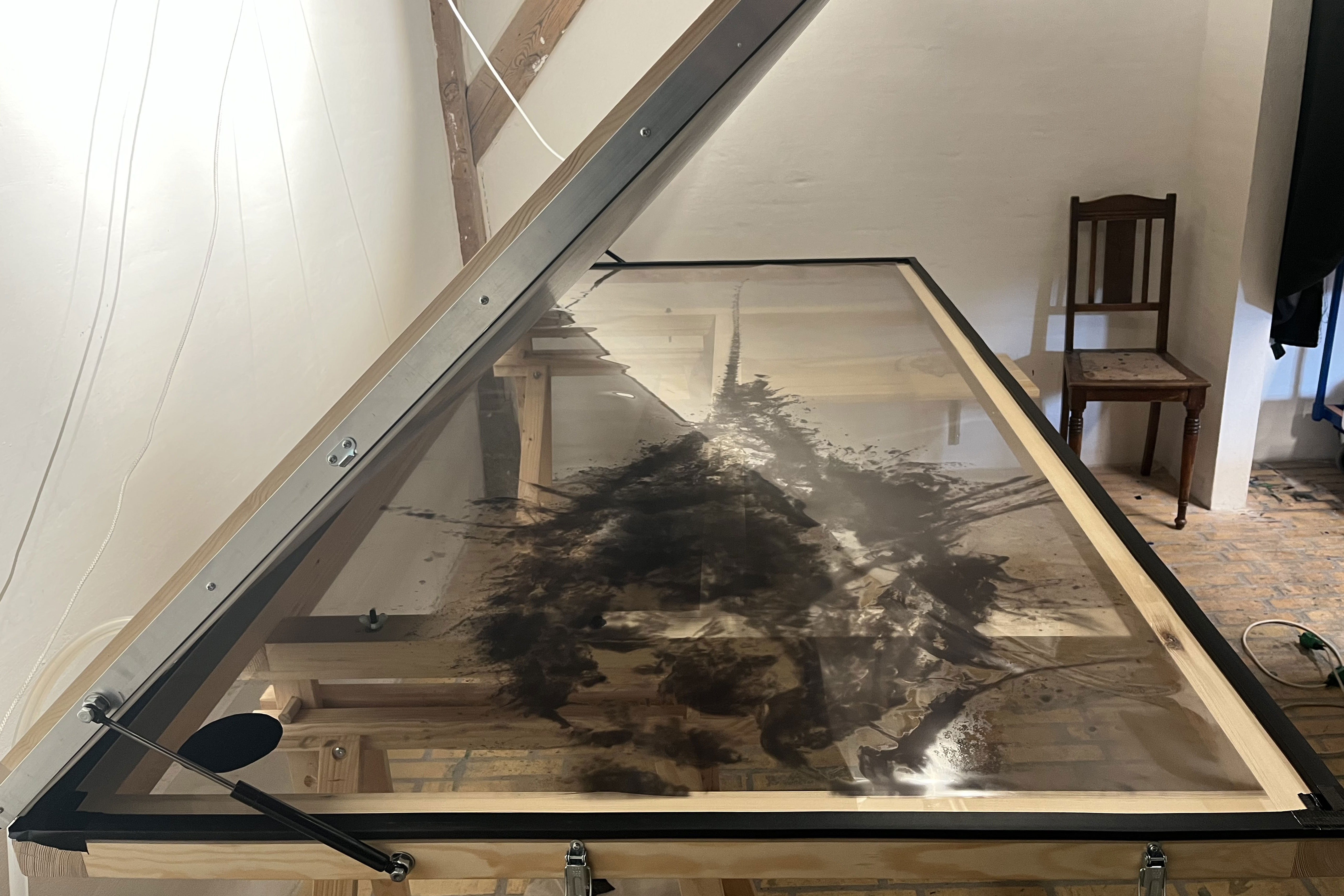
Once the vacuum is secured, the frame is hoisted up on its side making it available for UV exposure from the front.
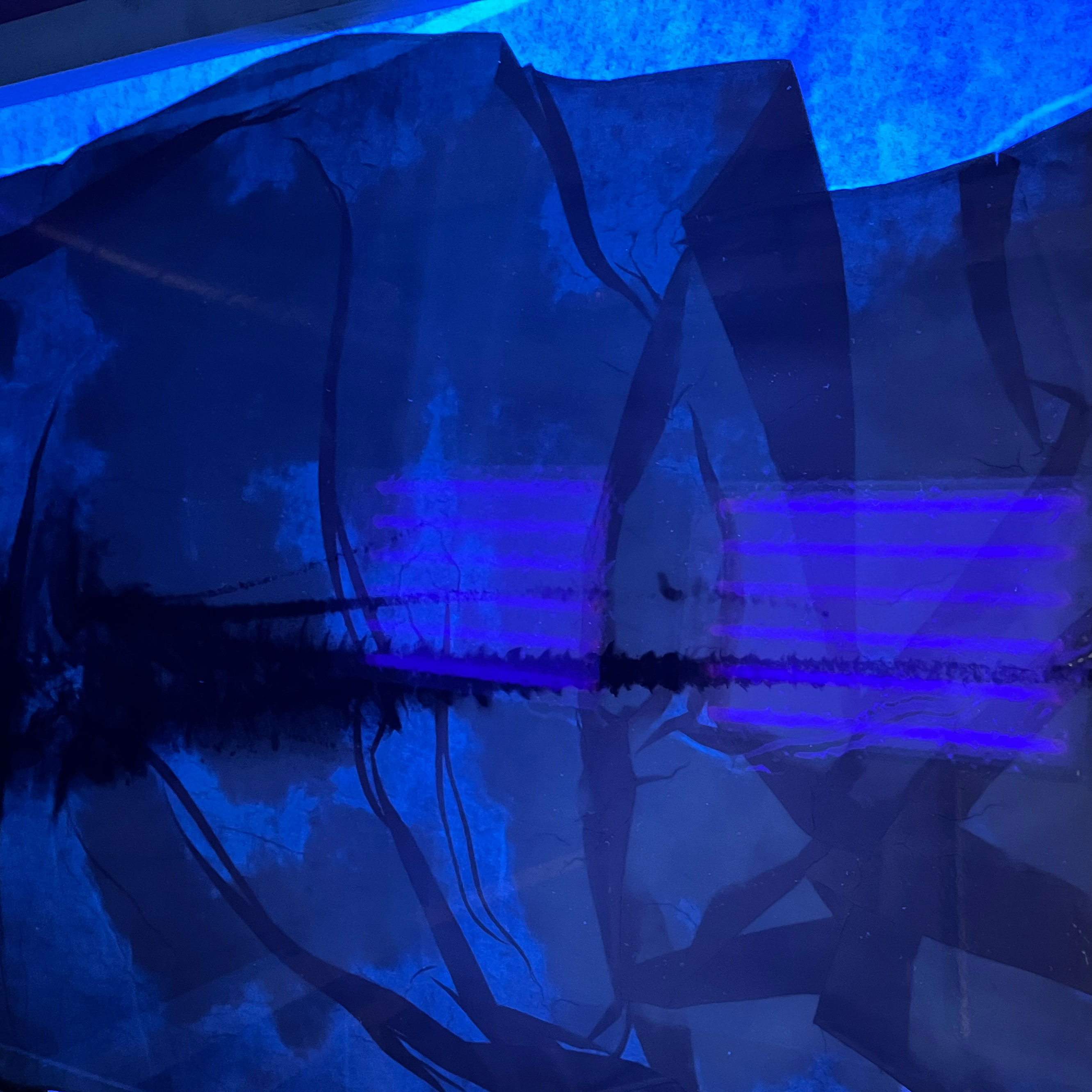
This technology is not a spaceship. Even if, today, it’s an impossible technology compared to a phone or a laptop, it’s an immediate technology. It’s a frame that hosts printed medium undergoing UV exposure – a tangible photographic process. The marks that are made can be subject to intervention. They can literally be touched, and this touch will be part of the image.
This vacuum frame is built from pine. Pine is cheap and accessible, particularly in Scandinavia, and for this reason alludes to affiliation with IKEA. You’re meant to feel like you could build one yourself. As a start, you could buy a couple of MITTBACK Trestles from IKEA. They make up the foundation of the frame.
Two identical pine subframes are joined at the back. A layer of thin rubber is mounted on one and a sheet of plexiglass on the other. A vacuum connector connects these frames to a vacuum pump which literally sucks out the possibility of depth from that space.
Functionally, the vacuum makes sure that the space between the two pine subframes is strictly two dimensional. But I like that it’s synonymous with so many other instances of vacuum in technology and in astrophysics: the astrophysical vacuum, the structure of the universe.
Isn’t any utterance about nothingness always already a performative breach of that which one means to address? (Barad, ‘What Is the Measure of Nothingness? Infinity, Virtuality, Justice’)
Once the vacuum is secured, the frame is hoisted up on its side making it available for UV exposure from the front.
This technology is not a spaceship. Even if, today, it’s an impossible technology compared to a phone or a laptop, it’s an immediate technology. It’s a frame that hosts printed medium undergoing UV exposure – a tangible photographic process. The marks that are made can be subject to intervention. They can literally be touched, and this touch will be part of the image.
This vacuum frame is built from pine. Pine is cheap and accessible, particularly in Scandinavia, and for this reason alludes to affiliation with IKEA. You’re meant to feel like you could build one yourself. As a start, you could buy a couple of MITTBACK Trestles from IKEA. They make up the foundation of the frame.
Two identical pine subframes are joined at the back. A layer of thin rubber is mounted on one and a sheet of plexiglass on the other. A vacuum connector connects these frames to a vacuum pump which literally sucks out the possibility of depth from that space.
Functionally, the vacuum makes sure that the space between the two pine subframes is strictly two dimensional. But I like that it’s synonymous with so many other instances of vacuum in technology and in astrophysics: the astrophysical vacuum, the structure of the universe.
Isn’t any utterance about nothingness always already a performative breach of that which one means to address? (Barad, ‘What Is the Measure of Nothingness? Infinity, Virtuality, Justice’)
Once the vacuum is secured, the frame is hoisted up on its side making it available for UV exposure from the front.
This technology is not a spaceship. Even if, today, it’s an impossible technology compared to a phone or a laptop, it’s an immediate technology. It’s a frame that hosts printed medium undergoing UV exposure – a tangible photographic process. The marks that are made can be subject to intervention. They can literally be touched, and this touch will be part of the image.
THANKS TO
Tom Egelund
UV lights
Ulrik Bebe
Ulrik Bebe
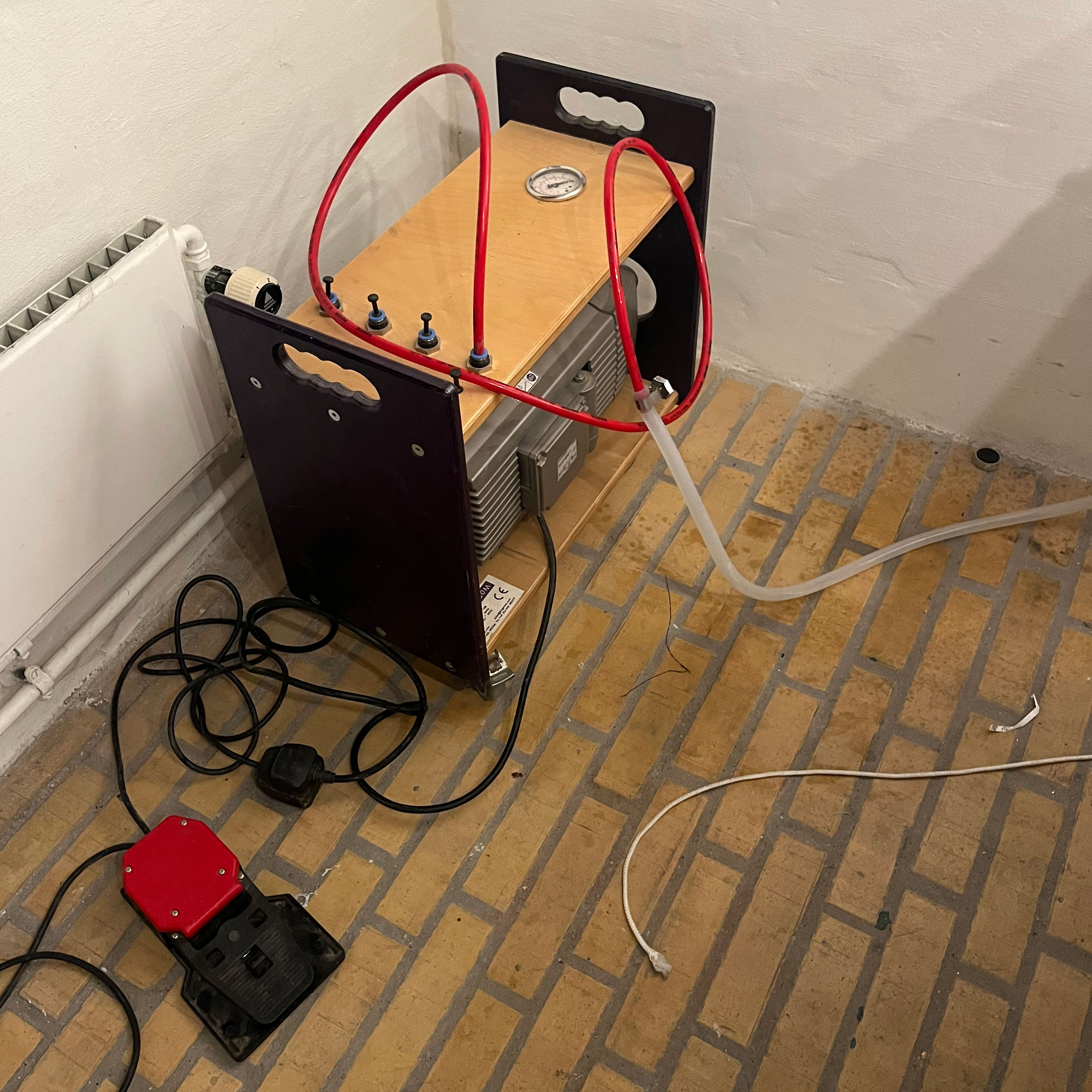
Vacuum pump
Vacuum pump
THANKS
Tom Egelund
UV lights
Ulrik Bebe
Vacuum pump